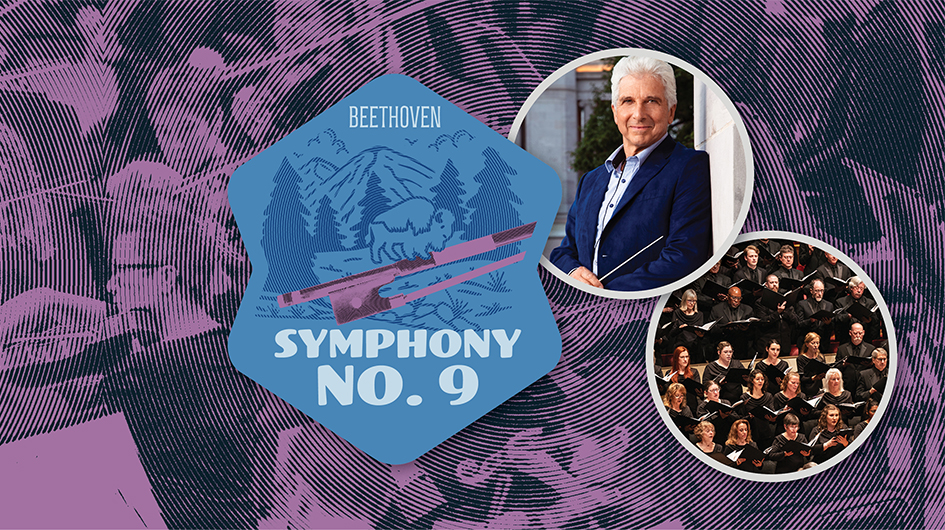
Open the season with Beethoven’s monumental masterpiece September 11 – 13.
There are few pieces of music that can stop the world in its tracks. Beethoven’s Symphony No. 9 is one of them.
For more than two centuries, audiences have risen to their feet as its final notes resound through concert halls across the globe. Its triumphant “Ode to Joy” has become a universal symbol of hope, peace, and our shared humanity and it’s been performed at moments of celebration and remembrance, political change and cultural milestones. It is difficult to imagine another work of art that has spoken so powerfully across time and place.
And yet Beethoven could never have imagined the life his Ninth Symphony would take on.
When he began sketching ideas for the work, Europe was emerging from decades of revolution and war. The world around him was changing rapidly, and Beethoven himself had become a revolutionary figure. He challenged nearly every musical convention of his day, expanding the emotional and structural possibilities of the symphony while redefining what audiences expected music could communicate. He was the consummate artistic rebel: fiercely independent, uncompromising, and endlessly innovative.
Perhaps that is what makes the Ninth Symphony so extraordinary. Written by one of history’s great individualists, it ultimately offers one of history’s most profound expressions of collective humanity.
At its heart, Beethoven’s Ninth is a journey that moves from darkness into light, from struggle toward transcendence. It is music that acknowledges suffering while insisting upon joy.
That journey began decades before the symphony itself. In 1785, German poet Friedrich Schiller published his poem An die Freude (“Ode to Joy”), a passionate celebration of human fellowship and universal brotherhood. Beethoven was immediately captivated by its ideals and reportedly considered setting the text to music as a young man. For nearly forty years, the poem remained with him as he searched for the right musical expression.
The Ninth Symphony would become his answer.
The work took shape slowly. What began as plans for two separate symphonies eventually merged into one monumental composition that Beethoven completed in 1824. By then, he was almost completely deaf. Unable to hear the music that existed so vividly in his imagination, Beethoven nevertheless composed one of the most enduring masterpieces in human history.
Its premiere in Vienna on May 7, 1824, remains one of music’s most famous moments. Following the final notes, Beethoven continued conducting, unaware that the audience had erupted into thunderous applause behind him. One of the performers gently turned him toward the crowd so he could see the standing ovation he could no longer hear.
Even now, that story feels almost impossible to comprehend.
Listening to the Ninth Symphony, it is easy to understand why audiences were so profoundly moved. The opening movement emerges mysteriously from silence before exploding with elemental force, as though Beethoven is conjuring an entire universe into existence. The music wrestles with tension and turmoil, refusing easy resolutions.
The second movement, a ferocious scherzo, propels the symphony forward with relentless rhythmic energy. Dark, urgent, and exhilarating, it offers little respite before giving way to one of Beethoven’s most sublime creations.
The third movement unfolds with extraordinary tenderness. Its soaring melodies seem suspended in time, offering moments of profound beauty and yearning that feel almost sacred. Here, Beethoven reminds us that stillness can be every bit as powerful as triumph.
And then comes the finale.
Few moments in music possess the dramatic power of its opening pages. Chaos returns once more before Beethoven does something unprecedented: he invites the human voice into the symphony. Themes from the previous movements are recalled and rejected until, at last, the familiar melody of “Ode to Joy” quietly emerges from the cellos and basses. Simple at first, it grows ever more expansive until a baritone soloist rises to sing the words Beethoven had carried with him for nearly four decades:
“O friends, not these tones! Let us raise our voices in more pleasing and more joyful sounds.”
What follows is nothing short of exhilarating. Chorus, soloists, and orchestra join together in an immense celebration of joy, unity, and humanity’s highest aspirations. Beethoven transforms Schiller’s poem into something greater than either words or music alone — a universal declaration that we are bound together by something larger than ourselves.
Its message remains as urgent today as it was in 1824.
Experience it Live
This September, Beethoven’s Ninth Symphony opens the Colorado Symphony’s 2026/27 Classics season alongside Gabriela Ortiz‘s Yanga, creating a powerful dialogue between two works separated by more than 200 years. Where Yanga tells the story of a revolutionary struggle for freedom, Beethoven’s Ninth imagines what becomes possible when humanity embraces liberty, equality, and joy. Together, they remind us that the pursuit of a more just and compassionate world is both timeless and unfinished.
There is a reason Beethoven’s Ninth has endured for generations. It asks us to believe that joy is not merely an emotion, but an act of hope. That music can bring us together. That humanity, despite its struggles, remains worthy of celebration.
More than two centuries after its premiere, Beethoven’s message still rings true.
All people become brothers and sisters when they dare to sing together.
SEP 11 – 13, 2026
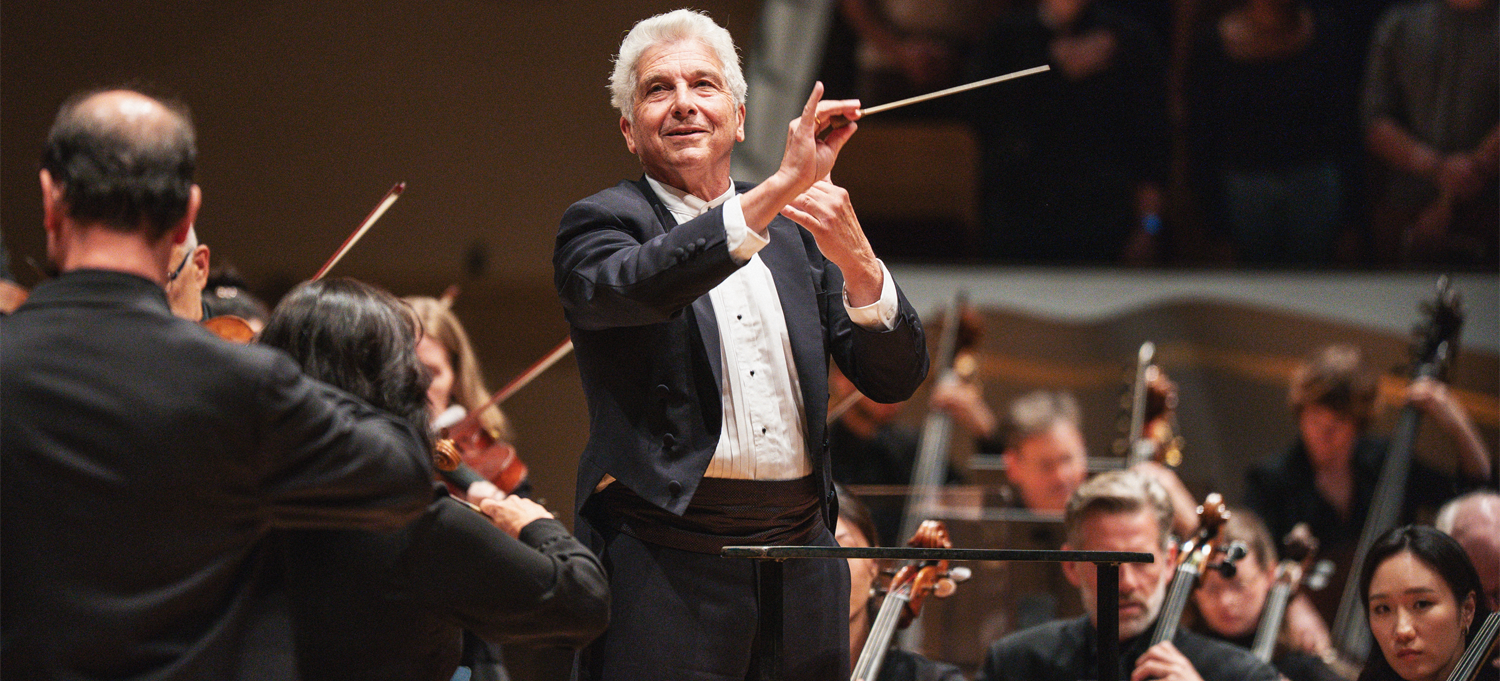
Beethoven Symphony No. 9 with Peter Oundjian
GABRIELA ORTIZ Yanga
BEETHOVEN Symphony No. 9 in D minor, Op. 125