

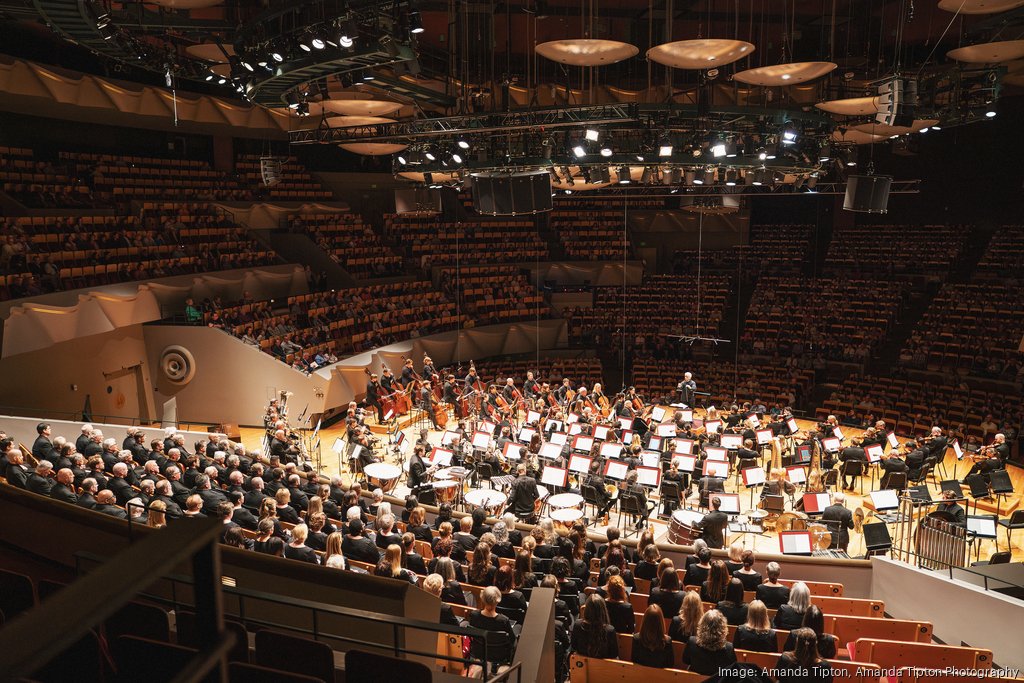
The CEO of the Colorado Symphony is pitching a $122 million renovation of Boettcher Concert Hall as more than a long-overdue modernization, predicting it will increase the symphony’s funding, attendance and reputation as a cultural powerhouse in the U.S.
Earlier this week, the Denver City Council approved the Colorado Symphony Association selling the naming rights of the nearly five-decade-old music venue, while keeping the Boettcher name on the internal concert hall itself, in an effort to raise at least $15 million toward a major, $122 million renovation of the hall.
Beyond the physical benefits of a more modernized hall, Daniel Wachter, the CEO and president of the symphony, sees the project as an opportunity to strengthen the symphony’s long-term business prospects and broaden its role in Denver’s economy.
“With enhanced experience, with enhanced accessibility, with enhanced acoustics, I expect that we’re going to get more butts in the seats,” he said.
He believes the upgrades to the hall could increase the symphony’s budget $5 million to $10 million annually because more people will be drawn to its shows for the enhanced experience.
The symphony will begin selling naming rights of the building itself and other internal spaces in the fourth quarter of 2026. The symphony must turn over at least $15 million to the city by Feb. 1, 2029, a goal that he says he is confident they will meet. The project has also received funding from other sources, including $20 million in voter-approved Vibrant Bond funding.
Beyond the minimum of $15 million it will need to contribute to the renovation, Wachter said, the symphony will require a large sum to keep the Colorado Symphony performing outside of Boettcher after work starts in the summer of 2028.
Boettcher was the first “in the round” symphony hall, or a venue where an orchestra is at the center of the room with the audience surrounding it, built in the U.S. and the second in the world. While that was and still is revolutionary to the U.S. arts scene, he said the hall has since lagged behind.
“The material of the seats, the shape of the seats, all the technology, all that science has so much evolved in the meantime in the last 48 years, [that’s] where there’s a huge opportunity through right design, through right architecture, through right materials to really enhance the acoustics experience,” Wachter said.