

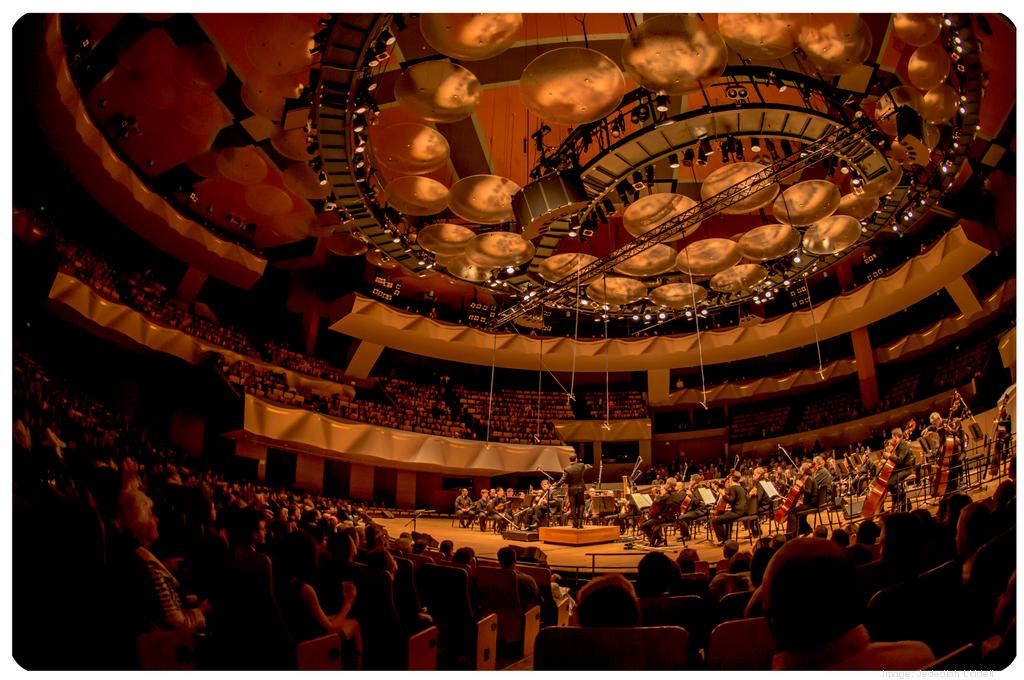
Intimacy is still Boettcher’s defining trick. The seats, however, are another story.
When Boettcher Concert Hall opened in March 1978, Denver unveiled an experiment in how audiences could experience an orchestra. The $13 million, nearly 2,700-seat hall debuted with the Denver Symphony Orchestra performing Vaughan Williams, Pyotr Ilyich Tchaikovsky and Johannes Brahms inside the first symphony hall in the United States built “in the round.”
Harold C. Schonberg, a Pulitzer Prize-winning music critic for The New York Times, called it “America’s newest concert hall, and its most unorthodox one,” praising a room where nobody sat more than 85 feet from the stage. “There is a feeling of intimacy that the other big halls of America cannot begin to match,” he added
That intimacy is still Boettcher’s defining trick. The seats, however, are another story.
“They are 48 years old,” Colorado Symphony President and CEO Daniel Wachter says during a tour of the hall with Westword. “Seats are the number-one complaint from patrons.”
The aging chairs are only one piece of a larger problem. Behind and around Boettcher’s still-striking auditorium are cramped backstage rooms, equipment lining hallways, outdated electrical and HVAC systems, accessibility barriers and a lobby that Denver Arts & Venues Executive Director Gretchen Hollrah describes as “a series of tunnels.”
Now Denver is preparing to spend $122 million to drag the building out of the 1970s without losing the design that made it famous.
“It’s time,” Hollrah says. “It’s been time to do a real, deep renovation of the space so that future decades can build on it. Because when we go in some of the spaces, I will say, ‘It feels like the 1970s in here, doesn’t it?’ And we deserve this next version.”