Skip to Content

Colorado Symphony Blog

Mozart’s Requiem: The Mystery Behind a Masterpiece

October 28, 2026

Mozart’s Requiem: The Mystery Behind a Masterpiece

An anonymous commission, a composer haunted by his own mortality, and a musical legacy that has endured for more than two centuries.

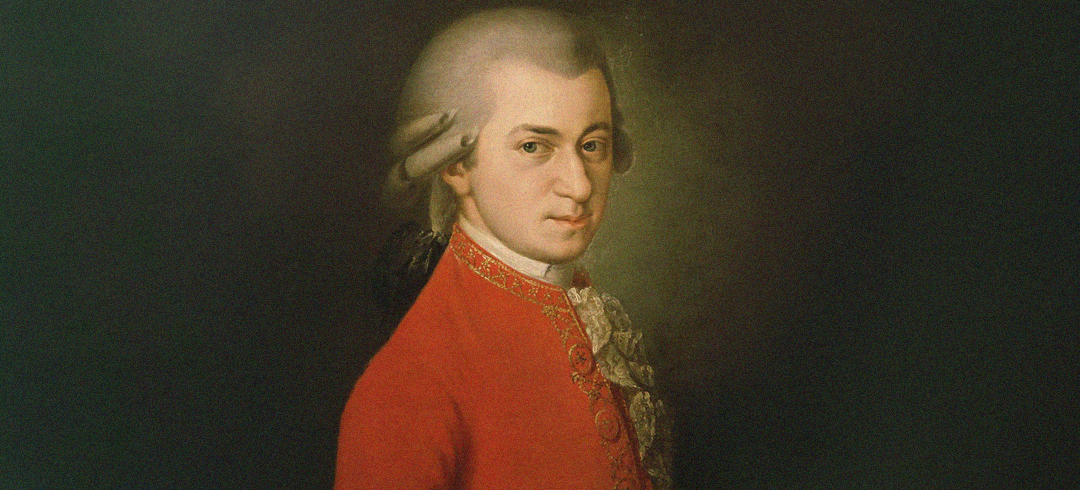
In the summer of 1791, Wolfgang Amadeus Mozart was racing against the clock. He was composing The Magic Flute, preparing an opera for the coronation of an emperor, and anticipating the birth of his sixth child. His finances were strained, his health was beginning to falter, and an unusual visitor had arrived with a mysterious request.

The stranger wanted Mozart to compose a Requiem Mass, a setting of the Catholic liturgy for the dead. He offered generous payment but refused to identify the person who had commissioned it.

Mozart accepted. He had no way of knowing that the work would become one of the most celebrated compositions in classical music, or that the mystery surrounding its creation would become inseparable from its legacy.

More than 230 years later, Mozart’s Requiem continues to confront listeners with some of life’s biggest questions: What does it mean to face death? Where do we find hope in the midst of fear? And how can music give voice to feelings that words alone cannot express?

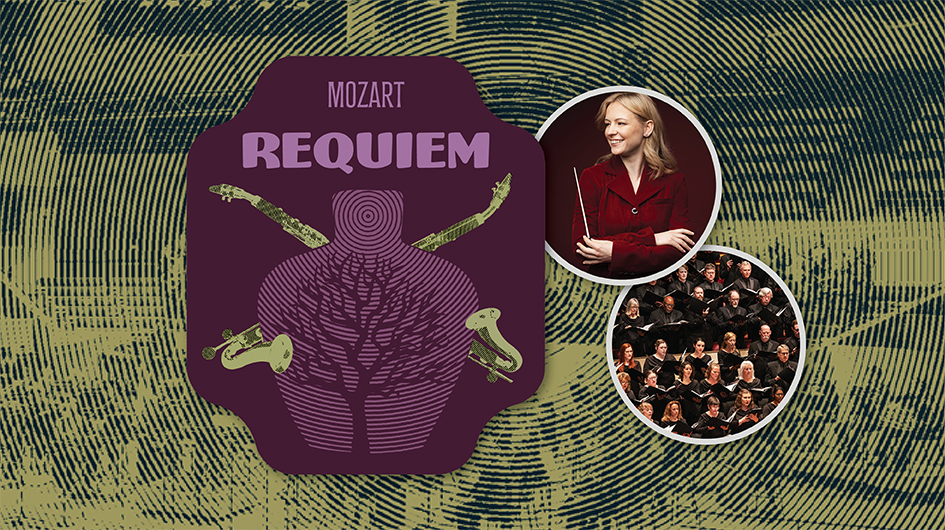
This November, conductor Gemma New, the Colorado Symphony Chorus, and four vocal soloists bring this extraordinary work to Boettcher Concert Hall for a trio of performances that explore the full emotional range of Mozart’s final masterpiece.

A mysterious visitor and a race against time

Mozart received the anonymous commission in July 1791, just as his professional and personal obligations were piling up. Alongside The Magic Flute and La clemenza di Tito, he was preparing for the arrival of his son, Franz Xaver Wolfgang, born July 25.

The Requiem had to compete for whatever time remained. Mozart made progress when he could, but by the autumn his health had deteriorated. In November, he became seriously ill and was confined to bed.

The mysterious visitor had made such an impression that Mozart reportedly became convinced he was composing his own funeral music.

The Requiem took on an increasingly personal significance, and he pressed himself to continue working despite his illness.

The story has inspired generations of listeners, but separating historical fact from later legend is important. We cannot know precisely what Mozart believed or how much the commission shaped his final days. What we do know is that he died in Vienna on December 5, 1791, at just 35 years old, leaving the Requiem unfinished.

The truth behind the commission was strange enough without the mythology. The patron was Count Franz von Walsegg, an amateur musician known for commissioning works anonymously and presenting them as his own. He wanted the Requiem to commemorate his wife, Anna, who had died earlier that year. The mysterious messenger was the count’s valet.

Mozart never learned the identity of the person who had commissioned the work.

The music Mozart left behind

Mozart completed the opening Introit and Kyrie and left substantial material for several subsequent sections. But the score was far from finished when he died.

His widow, Constanze, turned to Joseph Eybler, a composer and friend of Mozart, to help complete it. When Eybler stopped, Mozart’s pupil Franz Xaver Süssmayr took over, using Mozart’s surviving sketches and instructions to finish the work and supply music for its concluding movements.

The version audiences most commonly hear today is Süssmayr’s completion. That means the Requiem we know is a collaboration across an extraordinary divide: Mozart’s final musical ideas, preserved and developed by the people who knew his work, and the efforts of a student determined to bring his teacher’s last composition to the world.

The circumstances of its completion have prompted generations of scholars and musicians to debate which passages are Mozart’s, which belong to Süssmayr, and how closely the finished score reflects the composer’s intentions. Yet the work’s impact has never depended on resolving every question about its authorship.

What matters is the music itself.

A masterpiece that outlived its creator

The Requiem was first performed in its completed form in December 1793, at a service arranged by Count Walsegg in memory of his wife. The count initially claimed the composition as his own, but Constanze later helped establish Mozart’s authorship as she worked to publish her late husband’s music. The score appeared in print in 1802.

By then, the work had begun its journey into the musical imagination. Its mysterious origins, unfinished manuscript, and association with Mozart’s death helped fuel its legend, particularly during the Romantic era.

Mozart was able to give musical form to seemingly opposing emotions: terror and beauty, grandeur and intimacy, the fear of the unknown and the desire for peace.
The music doesn’t offer easy answers to the questions it raises. Instead, it allows listeners to sit with those questions, carried by the voices of the chorus, the soloists, and the orchestra.

Perhaps that is why the Requiem continues to resonate. It was born out of a mysterious commission and left unfinished by a composer who died far too young. Yet it has become a work that belongs to generations of listeners, offering a shared space to contemplate loss, mortality, and the possibility of consolation.

Experience it Live

On November 6 – 8, conductor Gemma New leads the Colorado Symphony, the Colorado Symphony Chorus, directed by Taylor Martin, and vocal soloists Joélle Harvey, Jennifer Johnson Cano, Andrew Haji, and Andrew Garland in Mozart’s Requiem at Boettcher Concert Hall.

The program also features Salina Fisher’s Kintsugi for Orchestra, inspired by the Japanese art of repairing broken pottery with gold, and Maurice Ravel’s Le Tombeau de Couperin, a tribute to friends lost during World War I. Together, the three works explore how music can respond to fragility, remembrance, and loss.

More than two centuries after Mozart began his mysterious commission, the Requiem remains a remarkable encounter with the human condition: a work that looks unflinchingly at death while finding extraordinary beauty in the act of singing together.