Skip to Content

Colorado Symphony Blog

Q&A with Pianist Garrick Ohlsson

September 14, 2026

Q&A with Pianist Garrick Ohlsson

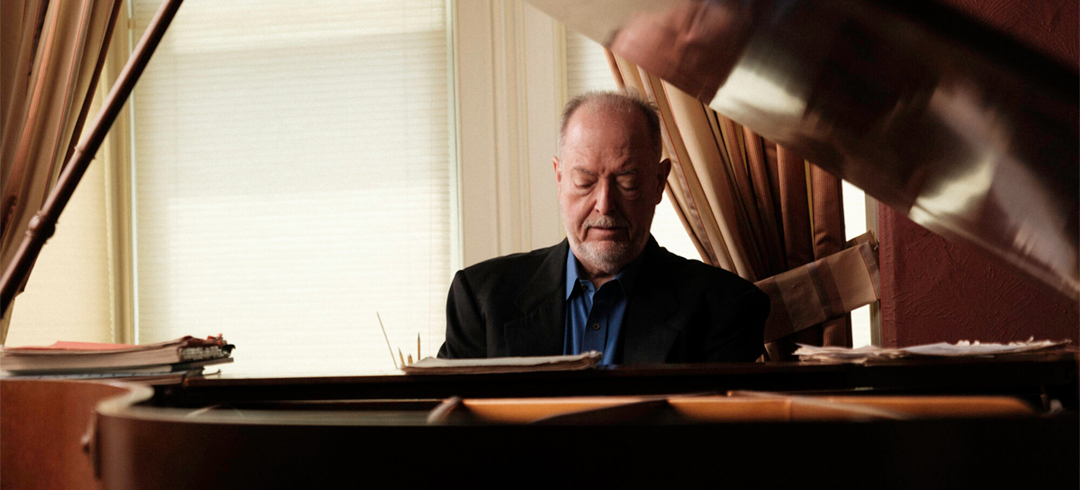
Garrick Ohlsson has been performing Rachmaninoff’s Third Piano Concerto since he was 15 years old, a lifetime of experience with one of the most demanding and beloved works in the piano repertoire. Known for its sweeping melodies, emotional intensity, and formidable virtuosity, the concerto has remained a constant throughout Ohlsson’s career, evolving from a daunting challenge into something of a musical laboratory.

Ahead of his return to Denver, Ohlsson spoke with us about his lifelong relationship with the piece, what he continues to discover in it, and his collaboration with conductor Rune Bergmann.
Q: What do you think makes Rachmaninoff’s Third Piano Concerto so enduring and beloved by audiences and pianists alike?

Garrick Ohlsson: I think that’s pretty easy to say. Its level of inspiration is incredibly high, the tunes are gorgeous, and its climaxes are incredibly gratifying. It also shows off everything a virtuoso pianist can ever be called on to do, from the lightest, most delicate — and very difficult — filigree to the most thunderous and impressive kinds of blatant, show‑off virtuosity.

It has this incredible journey from darkness to light. Rachmaninoff follows a pattern that Grieg established, and then Tchaikovsky, and that Rachmaninoff himself had used earlier in the Second Piano Concerto, where a beloved melodic theme introduced earlier returns in the third movement and becomes the grand climax.

It’s a glorious piece, and it’s so very Russian. That opening Russian theme just melts your heart. People simply love it. It’s one of the most completely successful, exciting and sensuous piano concertos ever written.

And if you do it reasonably well, you look heroic, and the audience is very gratified, so it makes everyone very happy. Although it’s hideously difficult. I’ve been playing it since I was 15 years old, so for me it’s like a difficult mountain climb that I’ve done many, many times. I know I can actually do it. Whereas the first time you play it, you’re not even sure you’re going to survive.

Q: You’ve performed this concerto many times throughout your career. How has your relationship with the piece evolved over the years, and do you discover something new in it each time you return to it?

Garrick Ohlsson: First of all, I learned it when I was 15 at Juilliard. My teacher assigned it to me, and I didn’t quite know how terrifying it was at the time. He said, “If you learn it now when you’re young, you’ll never be afraid of it.”

I also used it when I was 19, when I was studying with a new teacher, as part of remaking my approach to the piano. It’s a magnificent laboratory, a little bit like the Chopin Études, in the sense that you can learn so much about playing the piano well from it. So, in a way, this was a study piece for me.

I’ve also learned a lot from playing it with different conductors. I’m not a conductor myself, but I’m very conscious that this is not simply about the piano with the orchestra. This is a symphonic work, and everything needs to fit together within the symphonic concerto perspective, just like a good cast in a great play has to fit together.

You go to see Hamlet, and it’s not just about the person playing Hamlet or the person playing Gertrude. It all has to work together to make the maximum impact.

So I’ve learned a lot from my conductor colleagues, especially earlier in my career. I’m thinking about the great Otto-Werner Mueller, who taught at Juilliard and Curtis Institute, and who really showed me how the piece was made and put together — how the piano fits with the orchestra and vice versa.

So it’s been an enormous study piece for me. I’ve heard other pianists play it, and I’ve played it with so many conductors, so you’re always absorbing ideas and having thoughts about what you might do differently.

It’s very much like a dramatic play, where you have to work together. If your colleague reacts in a certain way, you have to react in a certain way. You can’t just do it the way you learned in school. It’s a constant exchange with the orchestra and the conductor.

And I think the older you get, the more enriched you are by all kinds of other musical and life experiences. Your emotional consciousness always seems to be getting richer.

Q: What makes Rune Bergmann such an exciting collaborator for this concerto?

Garrick Ohlsson: I love playing with him. He’s a marvelous conductor and a magnificent musician. I’ve played with him a couple of times — once in California and once in Poland, where he was music director in Szczecin in the northwest of the country.

We click. We get along very well, both personally and musically. He’s extremely well prepared and knows what’s going on in every corner of the piece.

So I’m looking forward to it very much. I always like playing with Rune, and I was very pleased when I saw that he would be conducting this concert.

Experience it Live

Don’t miss this program featuring one of the most demanding and beloved works in the piano repertoire.