

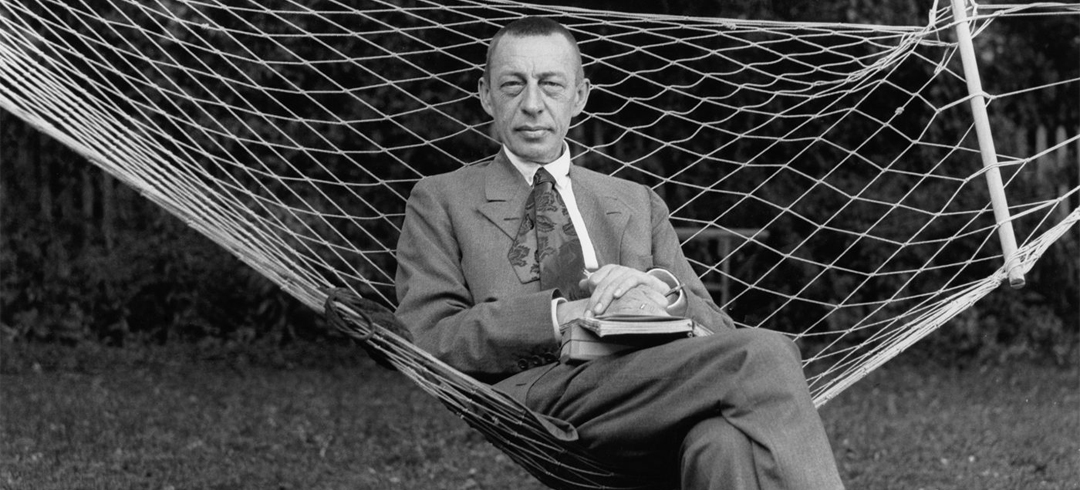
If you’re looking for a piece of classical music that has it all — sweeping melodies, thundering chords, heart-on-your-sleeve emotion and enough technical difficulty to make even the most accomplished pianists sweat — look no further than Sergei Rachmaninoff’s Third Piano Concerto.
Affectionately known as “Rach 3,” it is one of the most demanding pieces in the entire piano repertoire. But underneath all those impossible-looking notes is something much simpler: a composer who knew how to write a melody you can’t get out of your head.
And, oddly enough, a new automobile had something to do with it.
A new concerto, and maybe a new car
In 1909, Rachmaninoff was preparing for his first tour of the United States. He wasn’t exactly thrilled about the idea.
He was reluctant to leave his family and his home in Russia for an extended trip across the Atlantic. But there was a considerable amount of money on the table, and Rachmaninoff apparently found a way to make the situation a little more appealing to himself.
He wanted a car.
Writing to his friend Nikita Morozov, Rachmaninoff admitted, “I don’t want to go. But then perhaps, after America I’ll be able to buy myself that automobile… It may not be so bad after all!”
So, if you’ve ever reluctantly agreed to a business trip because you were promised something you really wanted, you and Rachmaninoff have at least one thing in common.
For the American tour, Rachmaninoff decided to write a brand-new piano concerto. He composed it during the summer of 1909 at Ivanovka, his family’s country estate in Russia, finishing it on September 23, just weeks before leaving for America.
The result was the Piano Concerto No. 3 in D minor, Op. 30.
Rachmaninoff gave the premiere himself on November 28, 1909, in New York, with Walter Damrosch conducting the New York Symphony Society. A few weeks later, he performed it again with Gustav Mahler conducting marking a meeting between two of the towering musical figures of the era.
There was just one small problem: Rachmaninoff had barely had a chance to practice the thing.
During the voyage to America, he practiced on a silent keyboard, which was essentially a piano keyboard without strings or sound, so he could prepare for the premiere while crossing the Atlantic.
That’s one way to make a long boat ride productive.
So… why is it so hard?
Let’s get this out of the way: Rachmaninoff’s Third Piano Concerto is really, really hard.
It demands enormous leaps, huge chords, rapid-fire passages and remarkable stamina from the pianist. Rachmaninoff himself had unusually large hands, which certainly didn’t hurt. But the concerto isn’t difficult simply because it contains a lot of notes. The pianist has to make all of those notes sound like music, not like someone frantically trying to win a piano-playing contest.
That distinction is important.
Rachmaninoff wanted the piano to sing.
The concerto begins almost deceptively simply. The orchestra introduces a quiet, haunting melody, and the piano joins in with the same theme. There’s no giant opening chord, no dramatic flourish and no immediate announcement that The Hardest Piano Concerto Ever™ has arrived.
Instead, it feels almost like someone quietly telling you a story.
Then things escalate.
The first movement gradually builds in intensity, moving between lyrical melodies and increasingly elaborate piano writing. Eventually, the orchestra drops away and the pianist is left alone for one of the most famous and fearsome cadenzas in the repertoire.
A cadenza is essentially the pianist’s big solo moment. The orchestra takes a step back while the soloist gets to show what they can do.
Rachmaninoff gave pianists two versions of the first movement’s cadenza. One is lighter and more fleet-footed; the other, known as the “ossia” cadenza, is bigger, heavier and even more formidable.
In other words: Rachmaninoff basically wrote two ways to make the pianist’s life difficult and let them choose.
The emotional center
After the fireworks of the first movement, the second movement, the Intermezzo, feels like a deep breath.
This is where Rachmaninoff the melodist takes over.
The music is tender and melancholy without becoming overly sentimental. A beautiful, long-breathed melody unfolds over a delicate orchestral accompaniment, creating one of those unmistakably Rachmaninoff moments: lush, romantic and just a little bit heartbreaking.
But the concerto doesn’t stay there for long.
The calm gradually gives way to movement and tension, and almost before you realize it, the second movement flows directly into the finale.
That seamless transition is part of what makes the concerto feel like one enormous musical journey rather than three unrelated pieces.
And then comes the finale
If the first movement asks, “How much can this pianist possibly play?” the finale answers, “Apparently, quite a bit more.”
The third movement is fast, energetic and relentlessly exciting. Rachmaninoff takes musical ideas introduced earlier in the concerto and transforms them into something more athletic and dramatic.
There are moments of lyrical beauty, but they’re surrounded by racing piano passages, powerful orchestral statements and huge waves of sound.
And then, just when you think the piece might finally be winding down, Rachmaninoff hits the gas.
The pianist launches into a final stretch of rapid-fire chords and octaves before the entire orchestra joins the rush toward the ending.
It’s not a gentle landing. It’s more like sticking the landing after a 40-minute gymnastics routine.
It can be tempting to think of Rachmaninoff’s Third as a kind of Olympic event for pianists. And, yes, watching someone play it is an impressive athletic feat.
But that’s not really the point.
The reason this concerto has endured isn’t because it is difficult. Lots of music is difficult.
It’s because Rachmaninoff somehow manages to make the technical challenges disappear into the emotion of the music.
The enormous chords become waves of sound. The rapid passages become excitement. The difficult leaps become sweeping gestures. And the melodies — those melodies — make the whole thing feel surprisingly human.
That was Rachmaninoff’s gift. He could write music of almost absurd technical complexity while making it sound completely natural.
He once explained that when writing the opening theme of the Third Piano Concerto, he was thinking about the sound of the melody and wanted the piano to “sing” it like a vocalist.
That may be the best way to listen to Rach 3.
Don’t worry about counting the notes. Don’t worry about how many octaves the pianist just jumped.
Just listen to the melody.
Listen as it moves from quiet and mysterious to powerful and triumphant. Listen for ideas from the opening movement returning later in the piece. Listen to the orchestra and piano chase each other, collide and ultimately come together.
And when the final chords arrive, you may find yourself doing what audiences have been doing for more than a century:
Wondering how on earth a human being just played all of that.
Experience it Live
Don’t miss this program infused with Nordic spirit, crowned by one of the greatest and most beloved works for piano ever written.
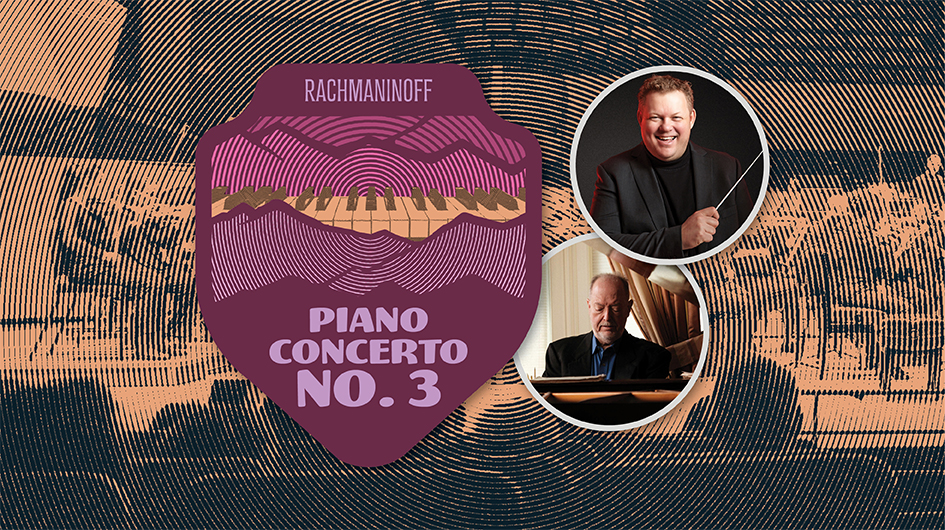
Rachmaninoff’s 3rd Piano Concerto with Garrick Ohlsson & Rune Bergmann
PRESENTED BY CPR CLASSICAL
SVENDSEN Norwegian Artists’ Carnival, Op. 14
SIBELIUS Symphony No. 1 in E minor, Op. 39
RACHMANINOFF Piano Concerto No. 3 in D minor, Op. 30