

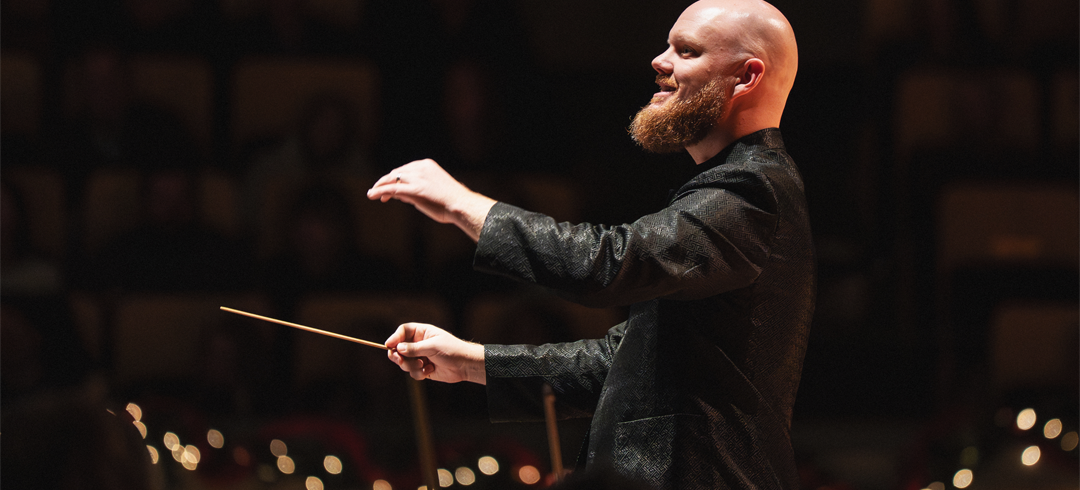
A conversation with Colorado Symphony Chorus Director Taylor Martin
Your Colorado Symphony and Chorus invite audiences on a sweeping musical journey with War and Peace: Haydn, Vaughan Williams, and Mazzoli, a program that moves from the unrest of conflict to the possibility of hope. Led by Chorus Director Taylor Martin, this choral showcase brings together century-spanning music — from Handel and Haydn to Vaughan Williams and Missy Mazzoli — each offering a unique lens on humanity’s enduring search for peace.
Performances take place Saturday, April 18 at 7:30 p.m. and Sunday, April 19 at 1:00 p.m. at Boettcher Concert Hall in downtown Denver.
Ahead of the performances, we spoke with Chorus Director Taylor Martin about the inspiration behind the program, the emotional journey it creates, and what audiences can expect when they experience it live.
Q: This program traces a powerful emotional arc from conflict to hope. How did you approach picking repertoire for this choral showcase event?
Taylor Martin: This program started with Dona Nobis Pacem. It’s a piece that feels distinctly real in its portrayal of the anxiety of war, thanks to the powerful text of Walt Whitman combined with Vaughan Williams’ personal experience serving in World War I. I knew that with this work we had an opportunity to build a program that spoke to the universal hope for peace in our world.
Knowing that Dona Nobis Pacem would close the program, I started thinking about the journey to get there. Haydn’s Mass in Time of War stood out not only for its title, but because of its place in late 18th-century Europe, written in anticipation of Napoleon’s troops arriving in Austria. The sense of looming conflict in the music felt like the right precursor to Vaughan Williams’ more immediate perspective.
Missy Mazzoli’s These Worlds in Us offered the perfect bridge—a meditation and a searching for answers between these two large works. The program came together fully when it was suggested we open with the question, “Why do the nations so furiously rage together?” from Handel’s Messiah. My hope is that we journey together through these works and reflect on the necessity — and possibility — of peace.
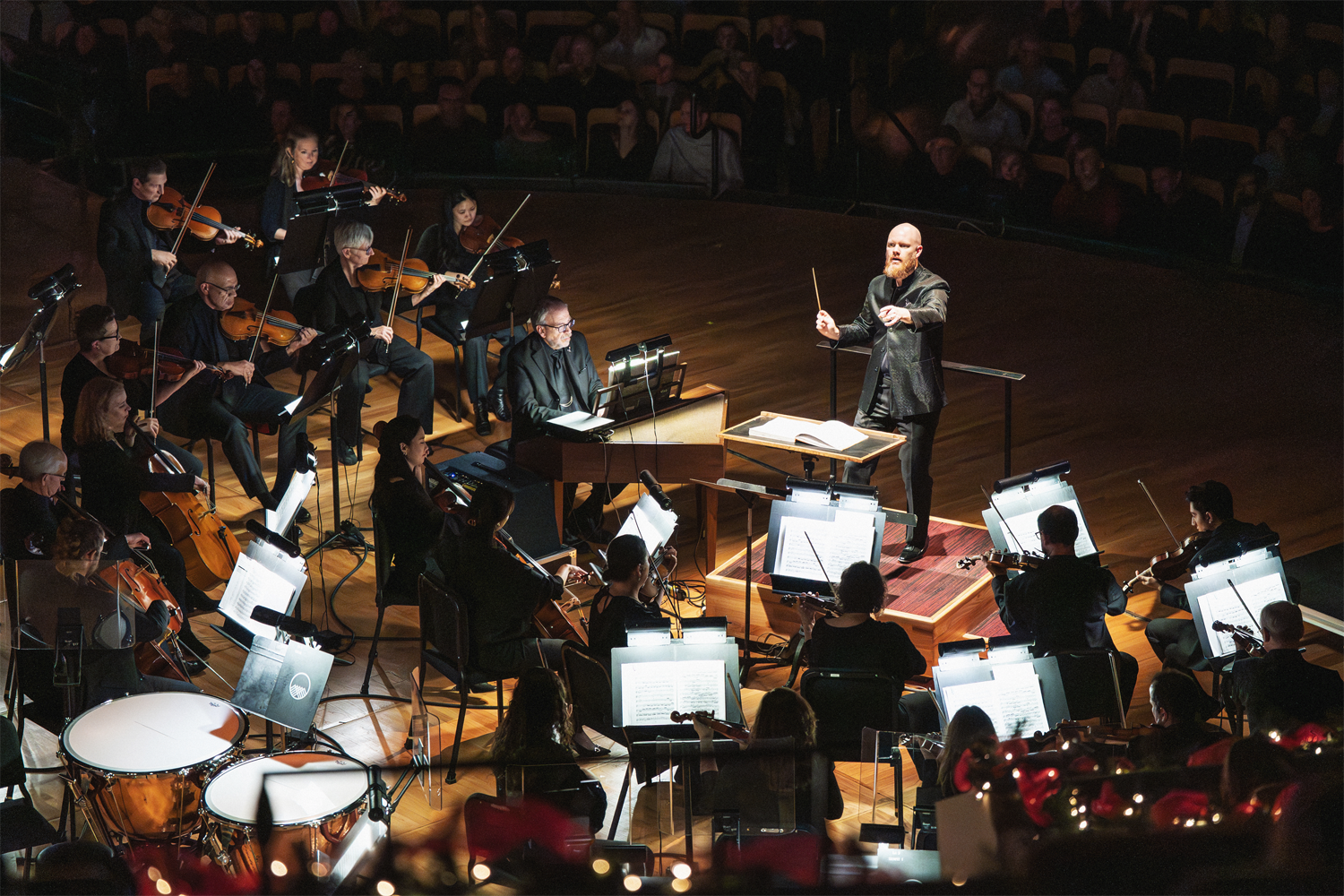
Q: Joseph Haydn’s Mass in Time of War reflects the anxiety of a Europe on the brink. What should audiences listen for in the Chorus that reveals that tension between fear and faith?
Taylor Martin: Haydn was incredibly inventive, and one of the most striking elements of this work is his use of timpani. They’re used almost like military drums—present throughout, but especially powerful as they build toward the final climax.
In the closing movement, the chorus sings “Lamb of God, who takes away the sin of the world, grant us peace,” accompanied by timpani that sound like a war drum approaching. That juxtaposition—pleading for peace while war draws nearer—captures the tension the Viennese must have felt at the time. It creates a vivid musical portrait of a world on the edge.
Q: Missy Mazzoli’s These Worlds in Us offers a modern perspective. What excites you about this piece?
Taylor Martin: Missy Mazzoli packs an incredible amount into just a few minutes. She creates a sound world that feels completely unique — serene, but also haunting and unpredictable.
Simple ascending melodies are disrupted by shifting rhythms, and lush harmonies create this almost fog-like texture. The piece feels both heavy and fragile at the same time, which I think is very intentional. Inspired by James Tate’s The Lost Pilot, it explores how grief and joy often exist side by side. There’s a sense of searching throughout — melodies trying to find a place to land.
Q: Ralph Vaughan Williams’ Dona Nobis Pacem offers a fitting conclusion. What makes this piece especially relevant for audiences today?
Taylor Martin: War has touched countless lives throughout history, and unfortunately, that remains true today. While this piece speaks directly to war and peace, its themes are universal — loss, separation, grief, and hope.
Through Vaughan Williams’ music and Whitman’s text, we experience a journey from a desperate plea for peace through the chaos of conflict, ultimately arriving at a vision of hope: “Nation shall not lift up a sword against nation.”
Peace can mean many things—globally and personally. This work reminds us that striving for peace is always worthwhile, and that in doing so, we’re actively pushing back against division and hatred.
Q: This program spans centuries of music but deals with themes that feel incredibly current. What kinds of challenges does it present for the Chorus?
Taylor Martin: The stylistic demands are significant. Haydn’s writing requires agility and precision — the chorus has to be nimble, shaping every phrase carefully to maintain clarity and flexibility.
Dona Nobis Pacem, on the other hand, demands incredible attention to detail and stamina. The harmonies can be quite complex, and there’s an expansive quality to the music that requires sustained energy over long stretches.
Each of these works would be challenging on its own. Performing them together in one program is no small feat — but it’s a challenge that’s absolutely worth it.
Q: For someone considering attending, what makes this program a can’t-miss experience?
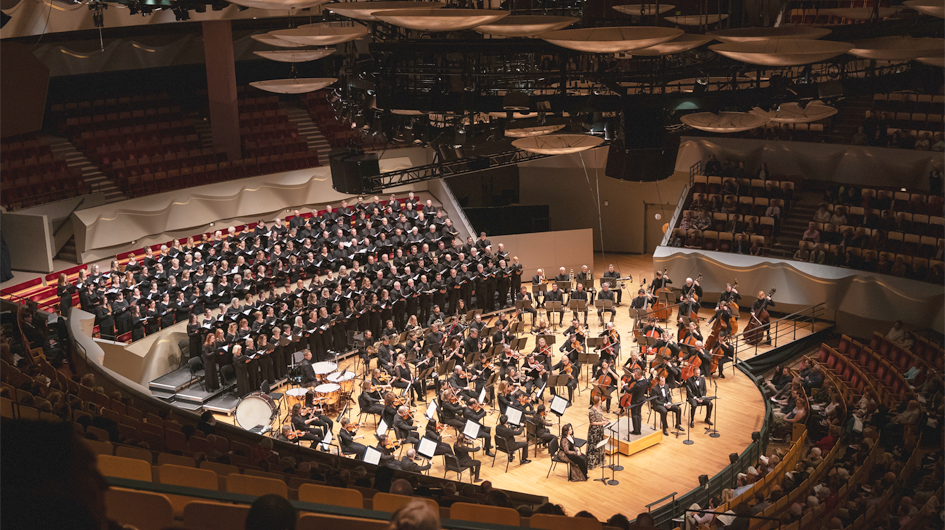
Taylor Martin: This is music that will move you, surprise you, and inspire you. You’ll hear sounds you’ve never heard before, created live by more than 200 musicians on stage.
There’s something incredibly powerful about experiencing that in person — surrounded by others, all sharing in the same journey. Music has a unique ability to bring people together, and this is a program that really embodies that.
Q: When the final notes fade, what do you hope audiences are left thinking or feeling?
Taylor Martin: I believe deeply in the transformative power of music. Every musician on stage is there because, at some point, music changed their life.
This program invites us to experience something beyond ourselves. It’s my hope that audiences leave feeling a sense of connection — maybe gratitude, maybe optimism, maybe simply inspiration from the way artists across centuries have created beauty out of struggle.
Ultimately, I hope people leave feeling just a little closer to one another — and reminded that even in difficult times, there is always space for connection, understanding, and hope.
War and Peace: Haydn, Vaughan Williams, and Mazzoli
HANDEL Excerpts from Messiah HWV 56
HAYDN Mass in C major, Job. XXII:9, “Mass in Time of War”
MISSY MAZZOLI These Worlds in Us
VAUGHAN WILLIAMS Dona Nobis Pacem