

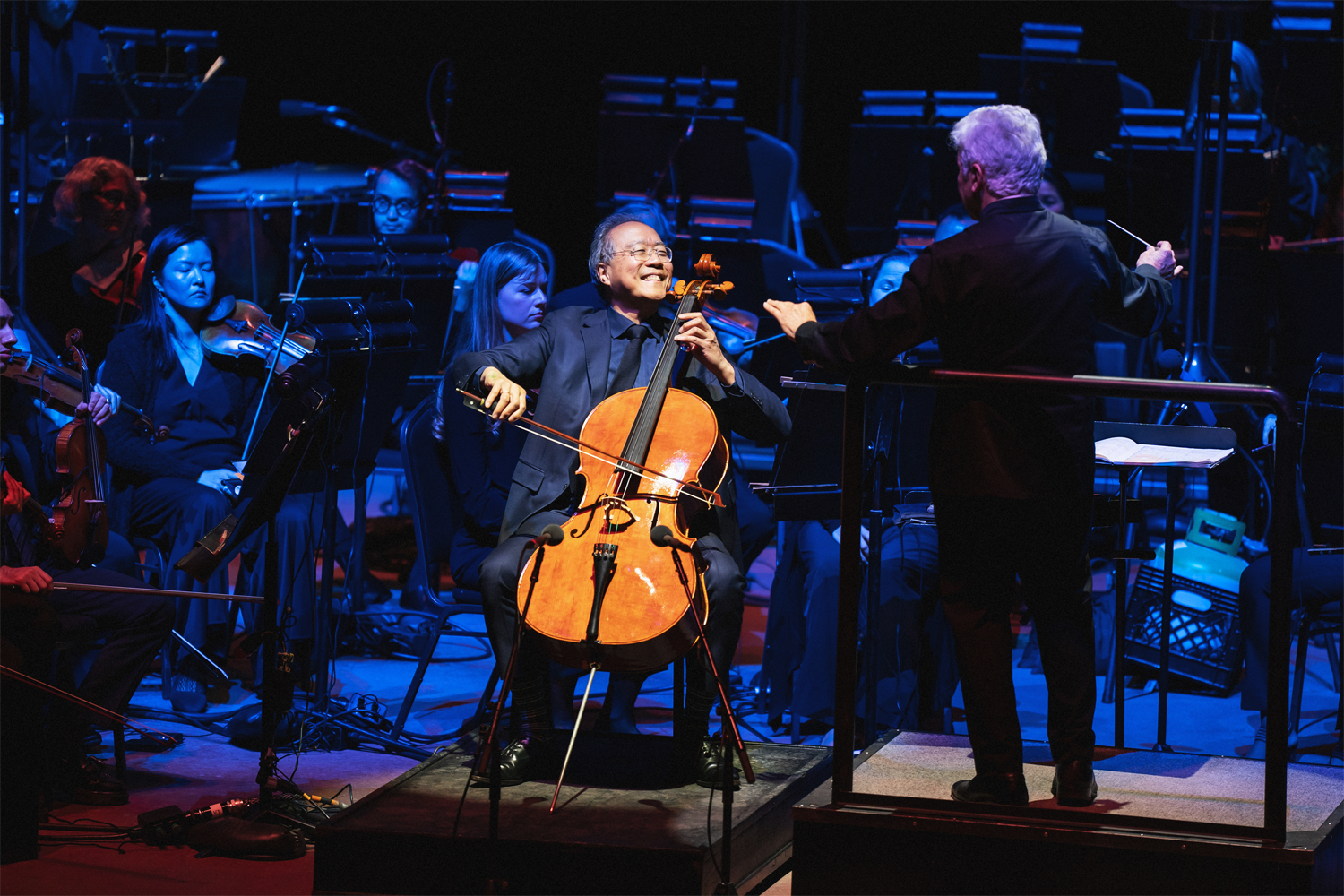
With a global audience, Ma models a way of being that goes against the grain of cynicism, polarization and isolation. It’s up to us to pay attention.
By Joshua Baron | Sept 1, 2026
It isn’t easy to interview Yo-Yo Ma. Not because he is one of the most famous musicians alive, a cellist who has been playing for world leaders since he was 7. Nor because he tends to answer questions with long stories rather than soundbites. The challenge is that he would rather be talking about you.
“There’s nobody that’s not interesting,” he said by way of explanation during a recent interview at his hotel while performing in Denver. The night before, he had given a vivid, freshly insightful account of Dvorak’s Cello Concerto with the Colorado Symphony for thousands of people at Red Rocks. I had been sent there to report on his life at 70 and how he is reconciling age with relentless ambition, so my instinct was to shift the focus back to him. But I quickly learned what former President Barack Obama meant when he once said of Ma, “For every question you ask him, he asks you two in return.”
Ma’s way of speaking would seem like deflection or false modesty if he didn’t behave that way with everyone. “You can’t fake it,” the composer Angélica Negrónsaid. Before the Red Rocks concert, I had followed him throughout the season: to recitals and a concerto premiere, to events that had little to do with music, far from any auditorium. Whether he was meeting a fellow artist, a fan or a community organizer, he was attentive and curious, willing to put his work on hold if it meant getting to know someone.
He is a sincerely committed humanist in a time that more readily rewards cynicism. He sees people as an ecosystem, deeply connected to one another and tonature at large, in an age of algorithms nudging us into echo chambers. When he speaks about immigration or education, he avoids the brash, polarizing rhetoric that reigns today, subtly treating these topics as matters of ethics rather than politics.
What if we followed his example?
“I look for models of behavior in other people,” said Stephen Colbert, who is a close friend. “His position is Olympian; his behavior is not.” And, increasingly, Ma’s way of being is being incorporated into his public-facing work through his organization Sound Postings. He can hardly make a tour stop without some kind of community program, like a conversation about gun violence in Chicago or a farm dinner in West Virginia. He has embarked on years long projects that may take him to national parks, for instance, or a nightclub in Lebanon. When he addresses audiences, he mixes expressions of wonder about time and memory with worries for the future, especially when it comes to the environment.