

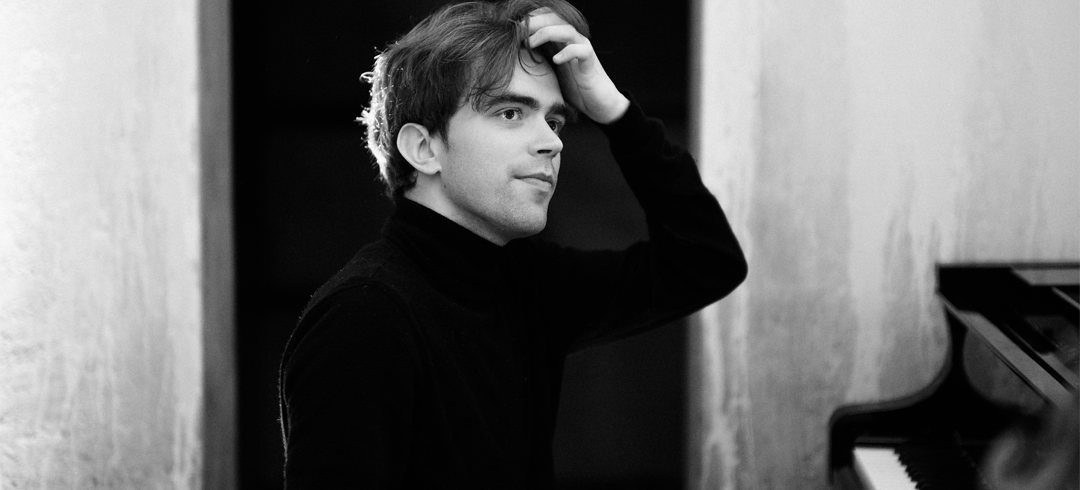
This weekend, the Colorado Symphony welcomes pianist Albert Cano Smit for his debut performances with the orchestra, taking on one of the most monumental works in the piano repertoire: Brahms’ Piano Concerto No. 2. Led by Resident Conductor Christopher Dragon, these performances promise sweeping symphonic grandeur, intimate chamber-like moments, and breathtaking virtuosity.
Ahead of concerts May 15 – 17 at Boettcher Concert Hall, we caught up with Cano Smit to discuss the emotional depth of Brahms’ masterpiece, collaborating with a new orchestra, and the storytelling power of music.
Q: This is your debut with the Colorado Symphony. What excites you most about stepping on stage with a new orchestra and our resident conductor Christopher Dragon?
Albert Cano Smit: The best part is to get to play this particular work with musicians of this caliber, because the role of orchestra and conductor are especially important in the piece. I really look forward to being inspired and invigorated by their sound and their musical soul. It’s also thrilling to step into a completely new and unknown setting, and to try to bring this piece to life with new colleagues, a new piano, a new hall (which is an instrument too) and a new audience.
Q: Brahms’ Second Piano Concerto is a massive, almost symphonic work. How do you approach balancing the role of soloist with being part of the orchestra’s overall sound?
Albert Cano Smit: It’s definitely a symphonic work! A big part of this balance is intuitive, because of how well the piece is written. The scale of the work is symphonic, but the spirit of it feels almost chamber-like to me. We all know how good a chamber music composer Brahms was, and the way the piano interacts with all instruments in this piece reminds us of that.
The key for me as the pianist is to capture the intensity and presence of the soloist role while always listening and communicating with the orchestra. At times I have to lead, other times respond and be led, some times we’re in confrontation, other times united.
Q: You’ve been described as a “moving young poet” at the piano. How does that sense of storytelling come into play in a work like this Brahms concerto?
Albert Cano Smit: I’m flattered by the description — although I only wish I could actually write poetry! There is certainly a lot of poetry in this work, as well as fire, melancholy, majesty, brilliance, wit, and even a sense of joie de vivre, all of which happen organically.
Brahms’ well known motivic development holds this gigantic entity together. It feels very much like a story that is written down and has to be imbued with life through every bar, and in this case the story may feel almost like a great novel.
Q: For audiences hearing you live for the first time, what do you hope they take away from your interpretation of Brahms’ Second Piano Concerto?
Albert Cano Smit: I hope we manage to convey some of what is said above, to share our deep love for this music, and hopefully allow people to love it too. To experience this journey together, in such a way that by the end of the evening everyone has lived a world in itself.
Easier said than done, given the many challenges the work presents. For those who don’t know the piece, a particularly moving moment happens in the slow movement, where we modulate into F sharp Major and the music takes us to a very special place, which is hard to pull oneself out of.
Experience it Live
Don’t miss this colorful program, conducted by Christopher Dragon, as the Colorado Symphony brings together Berlioz, Brahms, and Mussorgsky all in one unforgettable weekend.
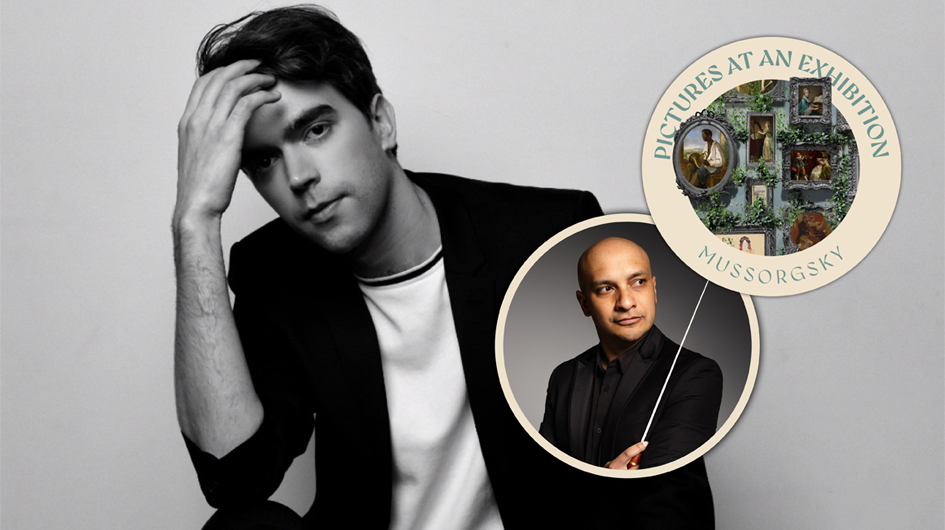
Pictures at an Exhibition with Christopher Dragon + Albert Cano Smit
BERLIOZ Rákóczi March
BRAHMS Piano Concerto No. 2 with Albert Cano Smit
MUSSORGSKY Pictures at an Exhibition (arr. Ravel)