

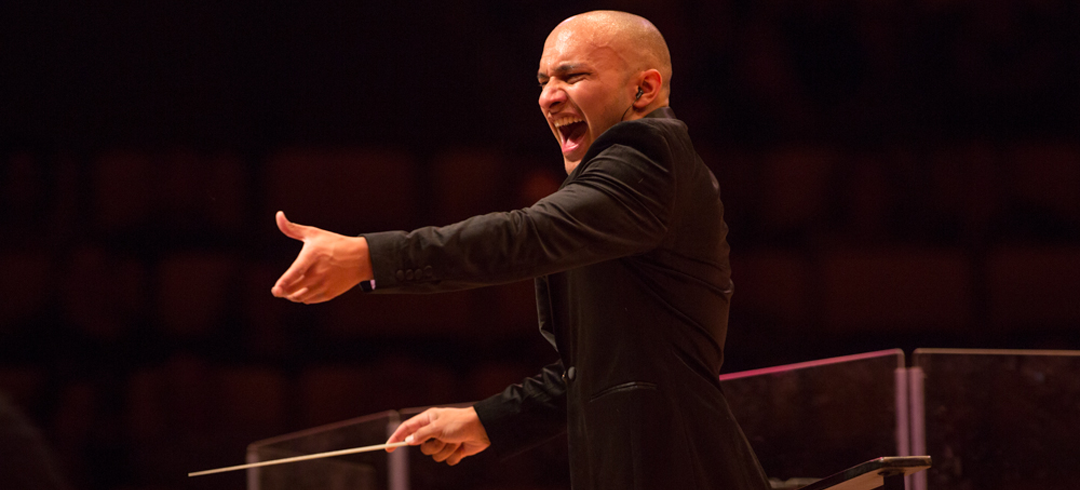
On any given night at Boettcher Concert Hall, you can often sense Christopher Dragon before you see him. There’s an electricity that seems to ripple across the hall, an alertness in the musicians, a buzz among patrons, a feeling that something unforgettable is about to happen. Most importantly, when Dragon enters the stage, musicians and audiences alike know they’re in the hands of a leader they can trust.
That trust has been earned over a decade of music making that has seen Dragon’s profile grow, blossoming into a rising star on the podium.
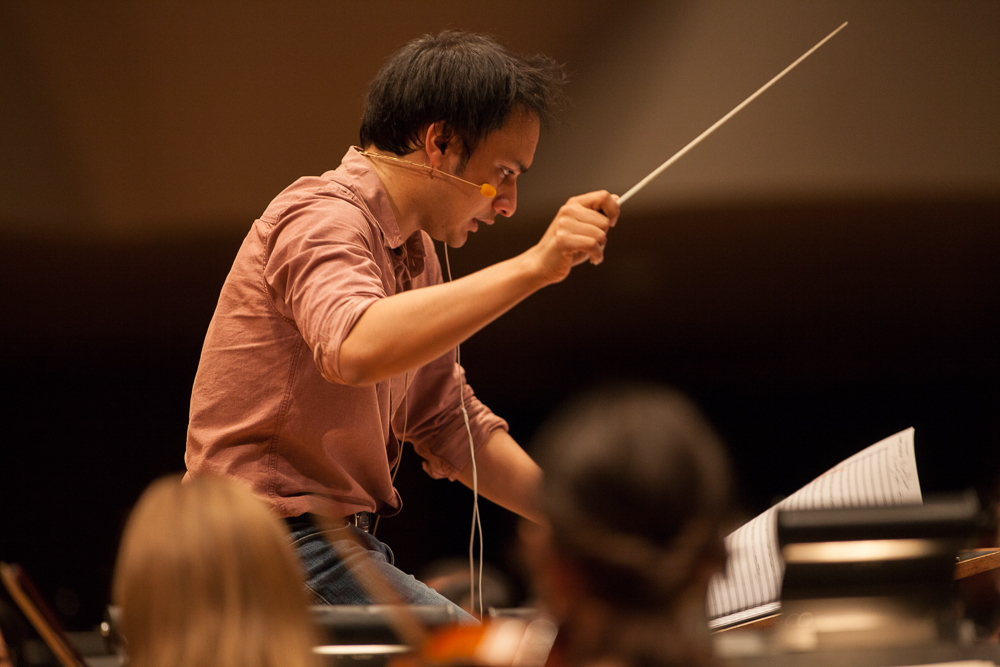
When Dragon first arrived in Denver as Associate Conductor of the Colorado Symphony for the 2015/16 Season, he was early in a career that was already moving quickly, but as he’s quick to admit, far from finished. “I don’t think you ever truly ‘arrive’ as a conductor,” he says. “Every time you step on the podium is another opportunity to learn, to grow, and to make mistakes.”
What the Colorado Symphony offered him at that formative moment was something rare: a place where mistakes weren’t fatal, curiosity was encouraged, and growth was expected. “The Colorado Symphony gave me a safe environment to do exactly that,” Dragon reflects. “I could take risks, I could stumble, and I could keep developing without fear.”
That freedom was matched by an extraordinary range as a conductor. Since 2015, Dragon has led everything from core classical repertoire to film concerts, pops, Broadway, video game concerts, and genre-defying collaborations. That breadth served to expand his résumé, but it also shaped his philosophy. “It really cemented my belief that an orchestra should be for everyone,” he says. “The Colorado Symphony reaches such a wide audience, and being part of that mission has fundamentally influenced who I am as an artist.”
Unlike many young conductors who pass briefly through orchestras on their way up the ladder, Dragon grew up here, both artistically and personally, alongside the same musicians season after season. That continuity has forged familiarity and camaraderie, allowing Dragon to command the respect of orchestra because of how deeply he cares for each of its musicians.
“Working consistently with the same group of musicians creates a shared musical language,” he says. “Often without words.” Over time, that unspoken understanding has allowed the orchestra to take real risks together, even under intense constraints. Dragon recalls tackling some of the most demanding programs imaginable with limited rehearsal time, projects that succeeded not because of perfection, but because of trust.
That trust also changes the atmosphere onstage. “We always aim for the highest level,” he says, “but that doesn’t mean we can’t enjoy ourselves along the way.” Anyone who has attended a Colorado Symphony performance he’s led can feel it: a sense of joy that radiates from the podium to the musicians and to the audience.
That joy, and Dragon’s calm, deeply prepared presence, has made him a go-to collaborator for artists far outside the traditional classical sphere. Over the years, he has worked with figures as varied as Gregory Alan Isakov, Cynthia Erivo, RZA, and Danny Elfman, artists for whom stepping in front of a symphony orchestra can feel daunting.
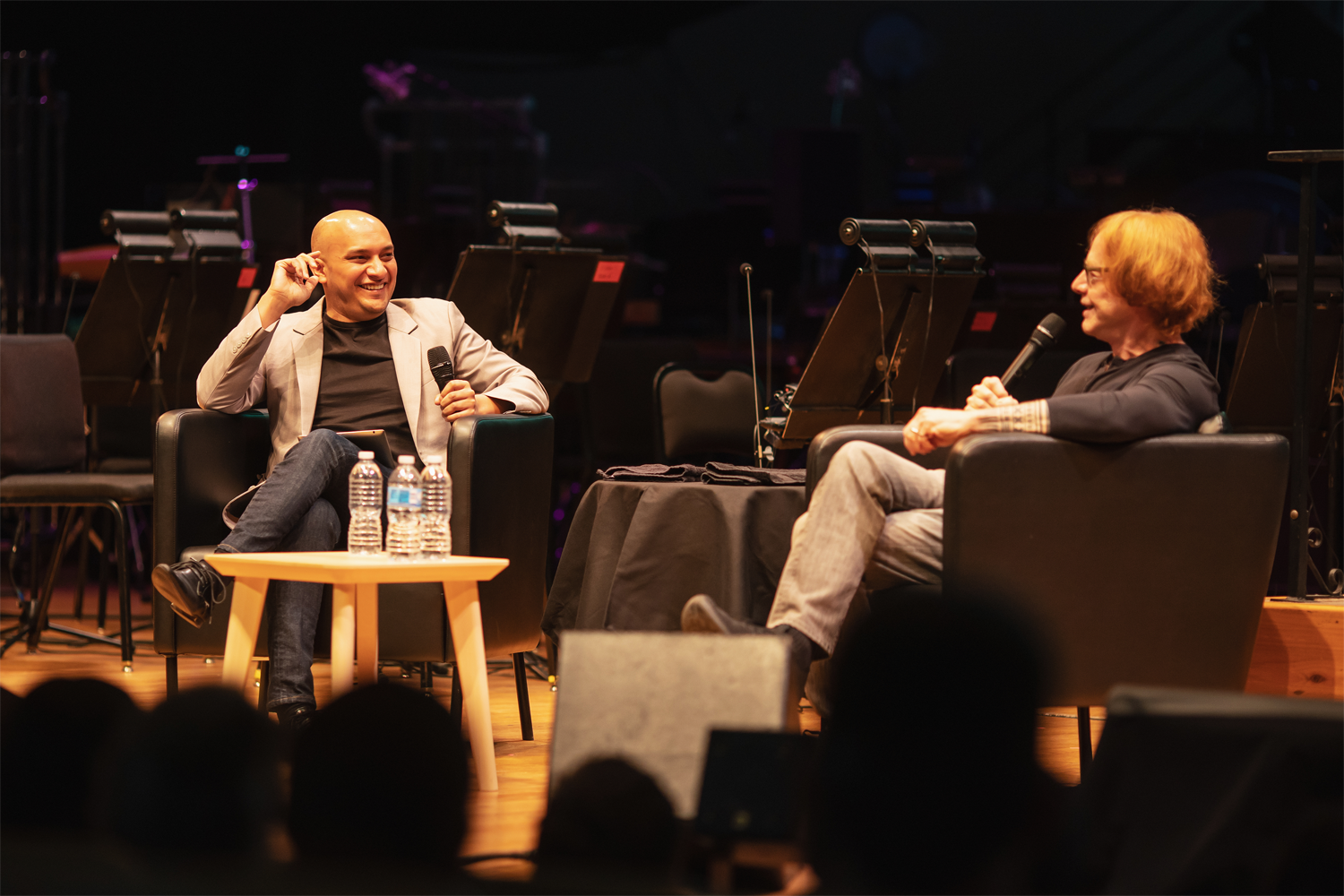
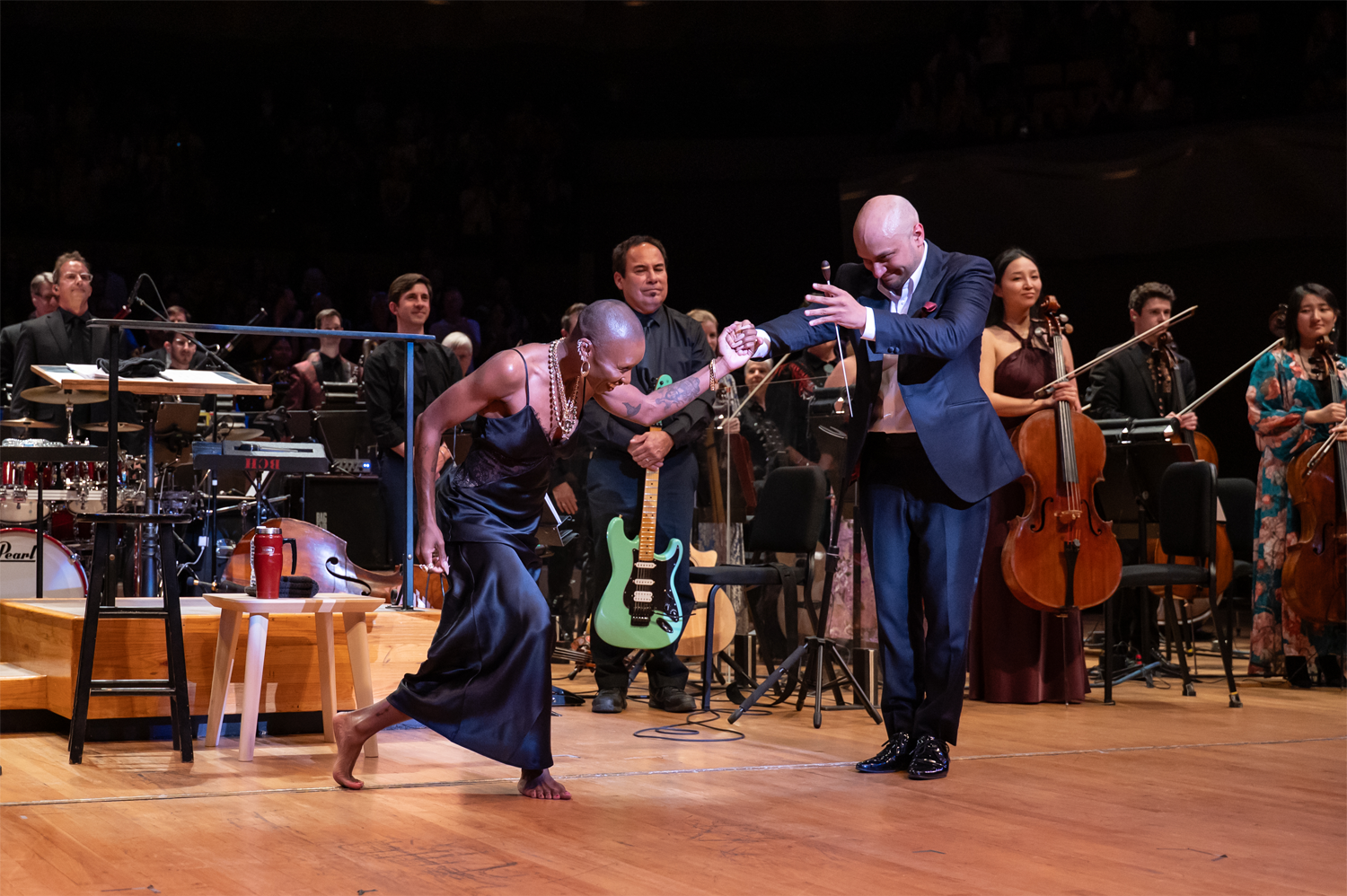
“A lot of it comes down to preparation and respect,” Dragon explains. “I approach these projects with the same seriousness and care as any classical program.” For artists new to the orchestral world, that respect is immediately felt. Dragon often becomes a kind of musical interpreter, translating between different languages, aesthetics, and working styles.
“Not everyone speaks the same musical language,” he says. “My job is to understand the artist’s intentions and translate them into something the orchestra can bring to life and vice versa.” Those experiences, he adds, have sharpened his listening skills and reshaped his understanding of leadership. Flexibility, empathy, and clarity aren’t optional; they’re essential.
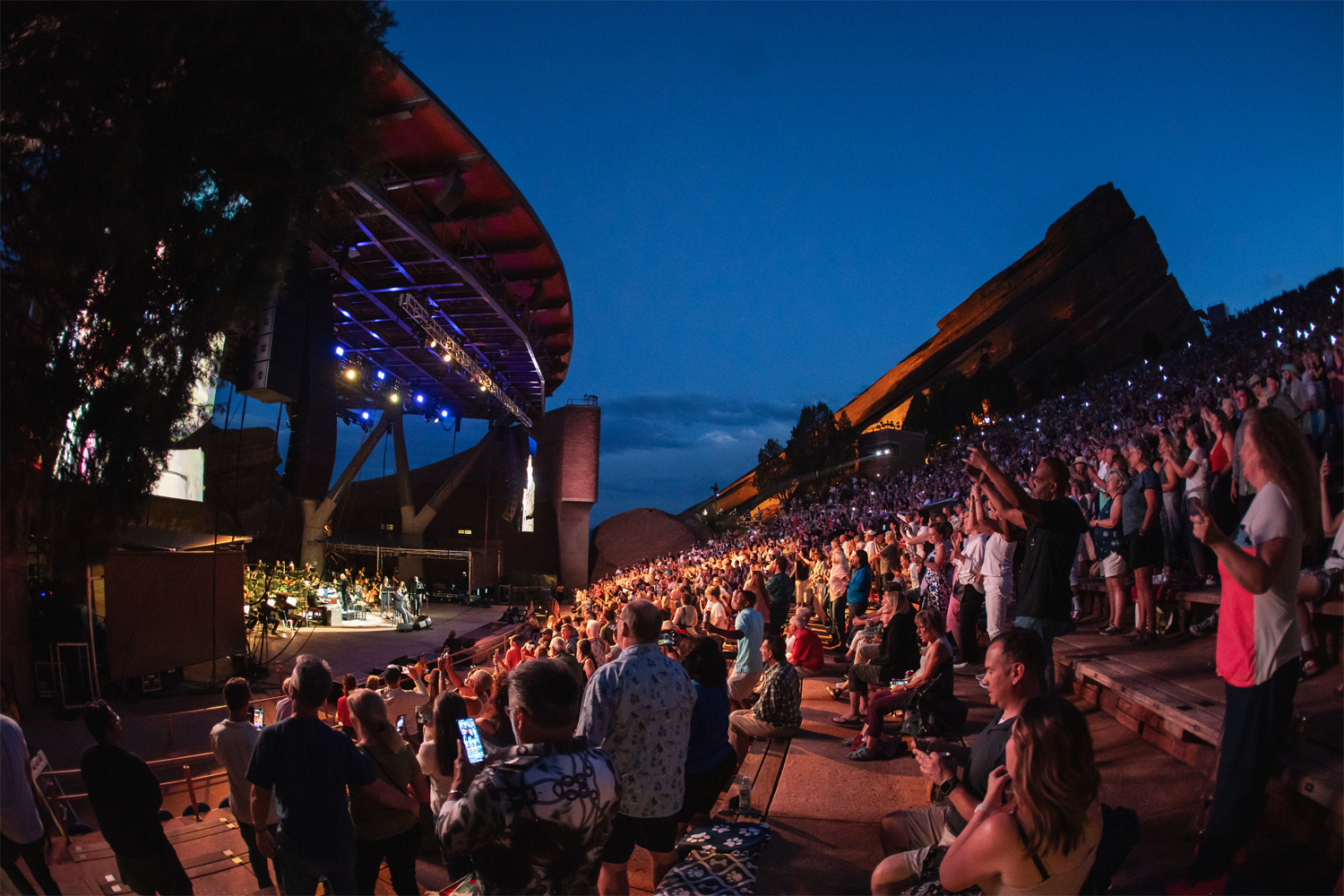
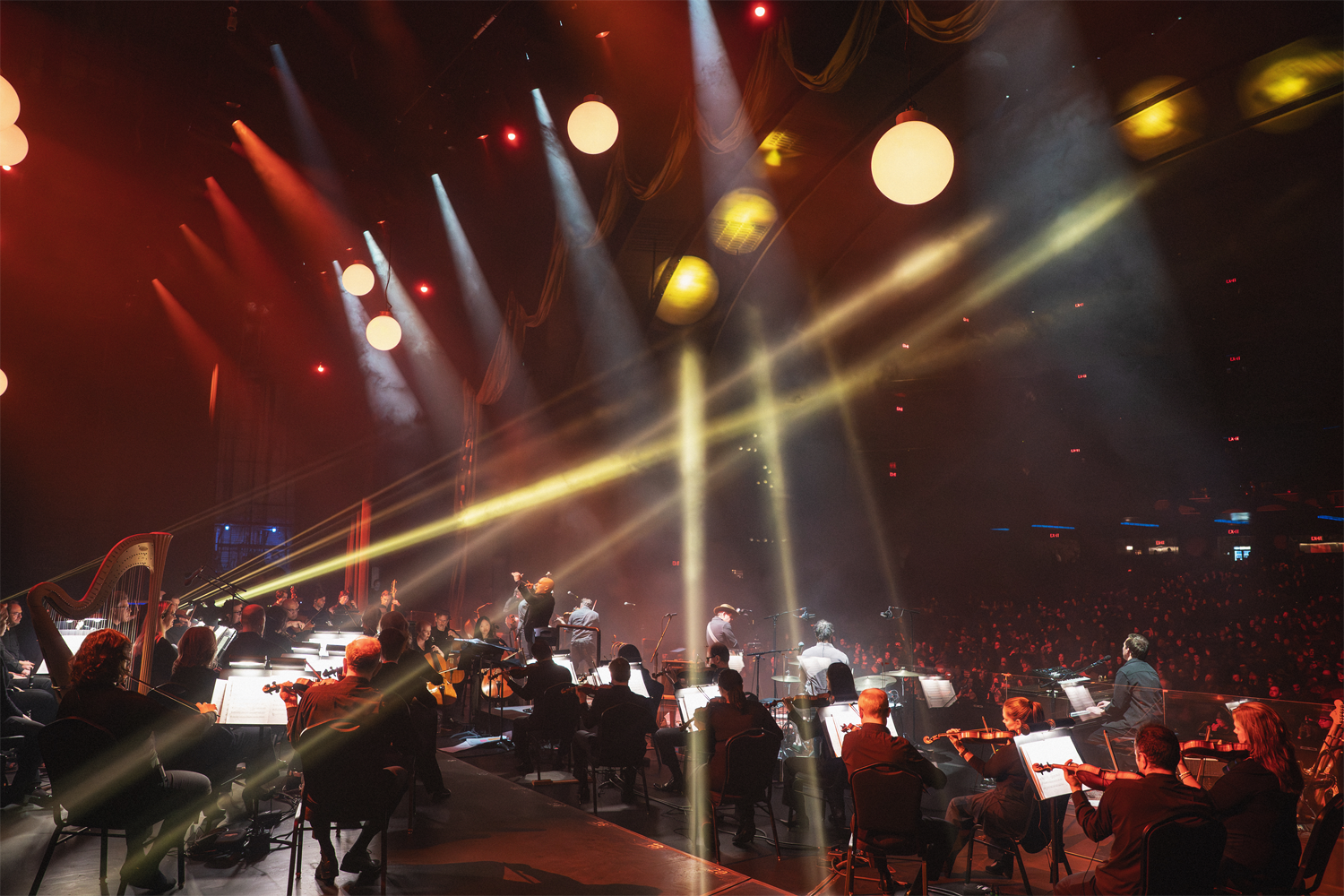
From the podium, the impact of those collaborations is visible in real time. The Colorado Symphony’s audience during these performances is among the most diverse in the country, an embodiment of what an orchestra can be when it opens its doors wide. “I don’t expect everyone who comes to a film or artist collaboration to suddenly become a regular at classical concerts,” Dragon says. “But it makes the symphony feel more open, more accessible. It invites people in.”
“Being part of an organization that’s actively shaping what a modern orchestra can be is incredibly meaningful to me.”
In many ways, Dragon has become a living expression of the orchestra’s mission to inspire and unite humanity through live symphonic music, using the orchestra not just as an instrument, but as a bridge, connecting communities across Colorado and far beyond it.
Just as importantly, the orchestra hasn’t merely followed trends, it has helped set them. Dragon takes pride in seeing programs pioneered in Denver later appear on stages across the country. “Being part of an organization that’s actively shaping what a modern orchestra can be is incredibly meaningful to me.”
For all his crossover success, Dragon remains deeply committed to the classical core. Each season, he leads two Classics programs with the Colorado Symphony, concerts he describes as “major pillars” of his year.
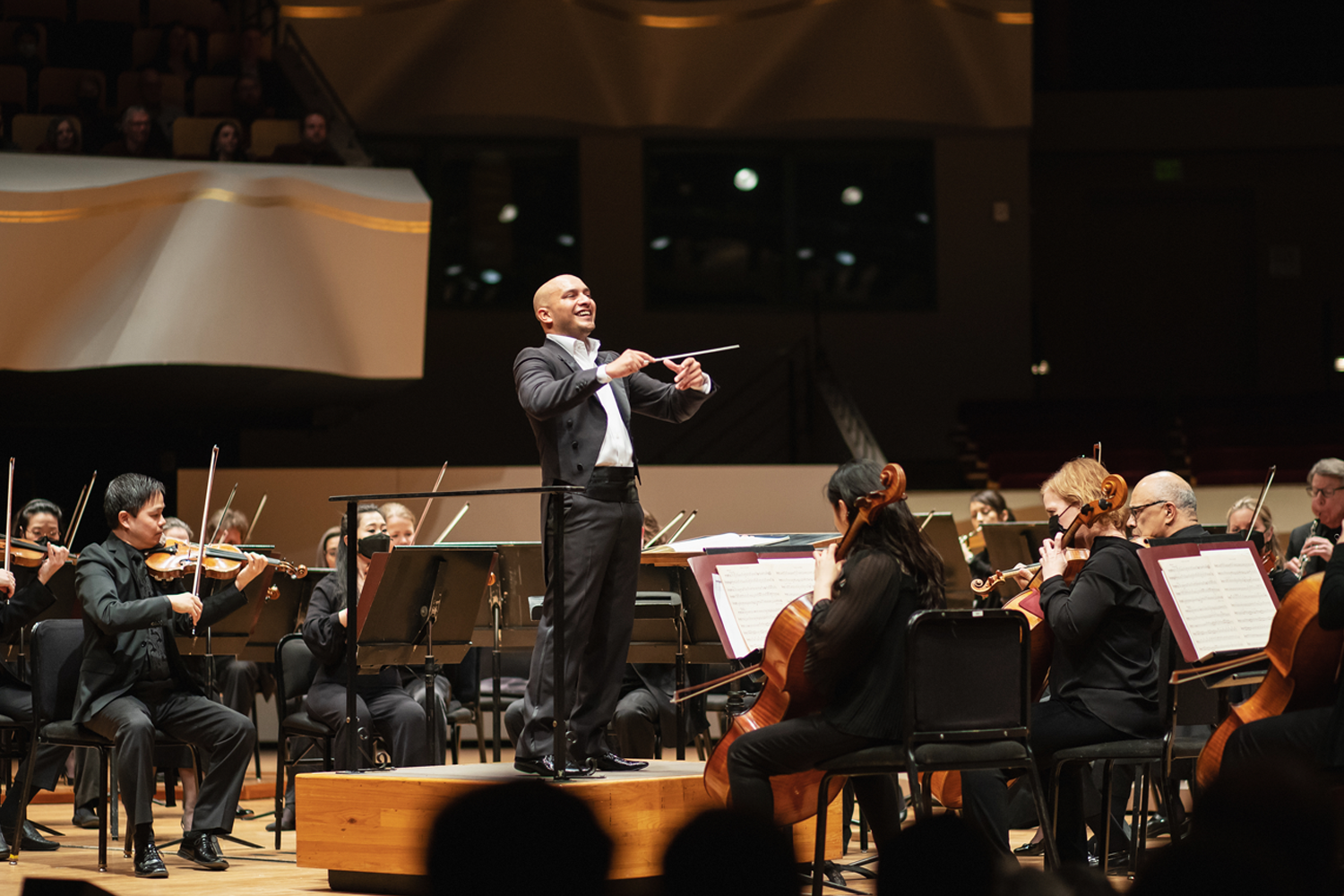
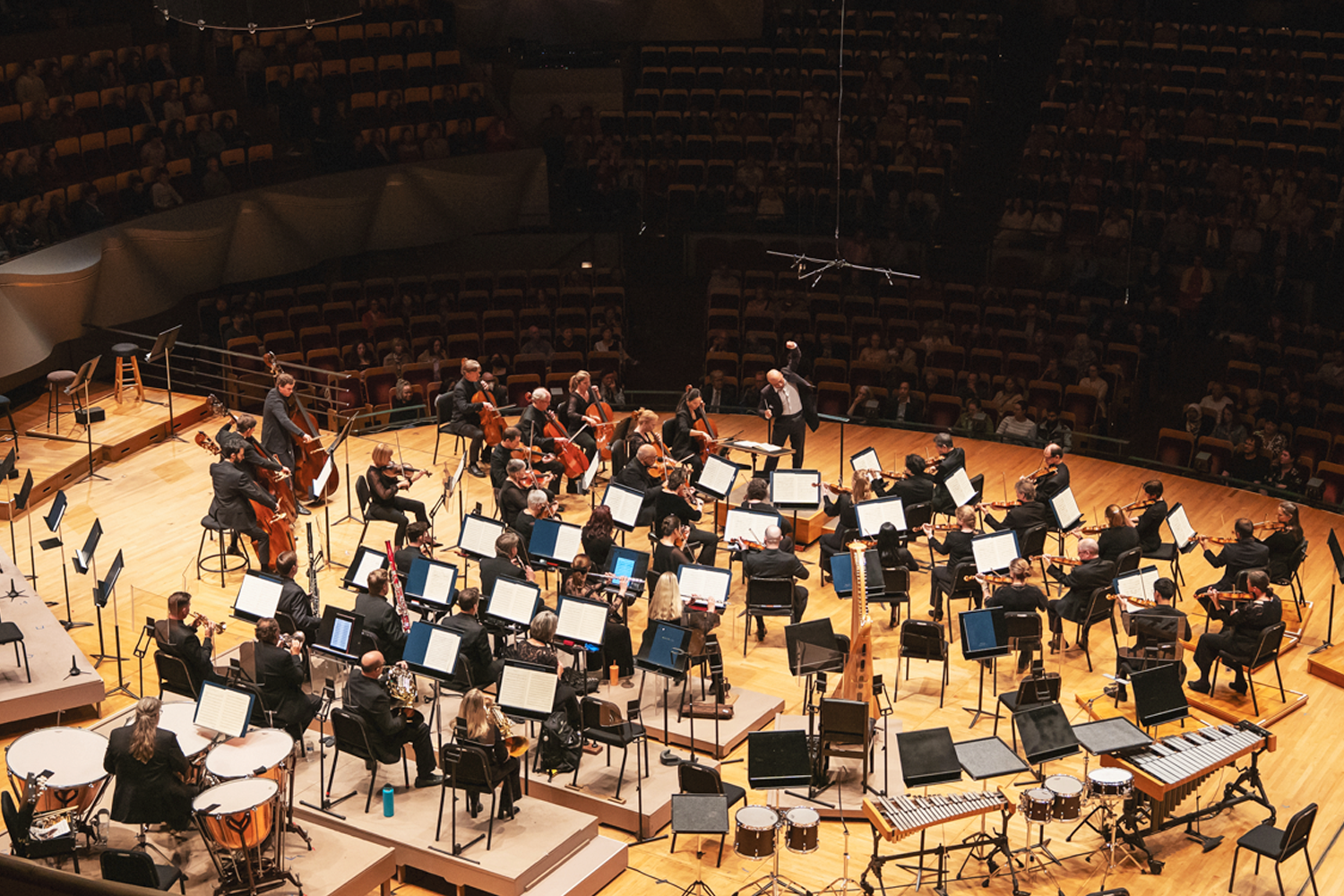
“They keep my conducting chops sharp,” he says, particularly in a field that often forces conductors into narrow categories. Dragon occupies a rare middle ground, moving fluidly between classical and pops worlds, and he believes that balance makes him better at both. With more rehearsal time on Classics programs, he relishes the chance to dig deep, to shape, refine, and uncover what the music has to say.
Artistically, these performances are where Dragon feels most grounded. They’re also where he hopes to serve as a bridge for audiences encountering classical music for the first time. “I fell in love with music through the classical world,” he says. “If I can help spark that connection for someone else, that’s incredibly rewarding.”
Dragon’s performances are often described as energetic, expressive, and occasionally theatrical. But he’s wary of the idea that any of it is calculated. “Nothing I do physically on the podium is planned,” he says. “I’m completely focused on shaping the music.”
If audiences enjoy watching him conduct, that’s almost incidental. Dragon insists that authenticity matters more than image, especially in a profession where musicians have, as he puts it, an “incredibly good BS radar.” Pretending to be someone else simply doesn’t work.
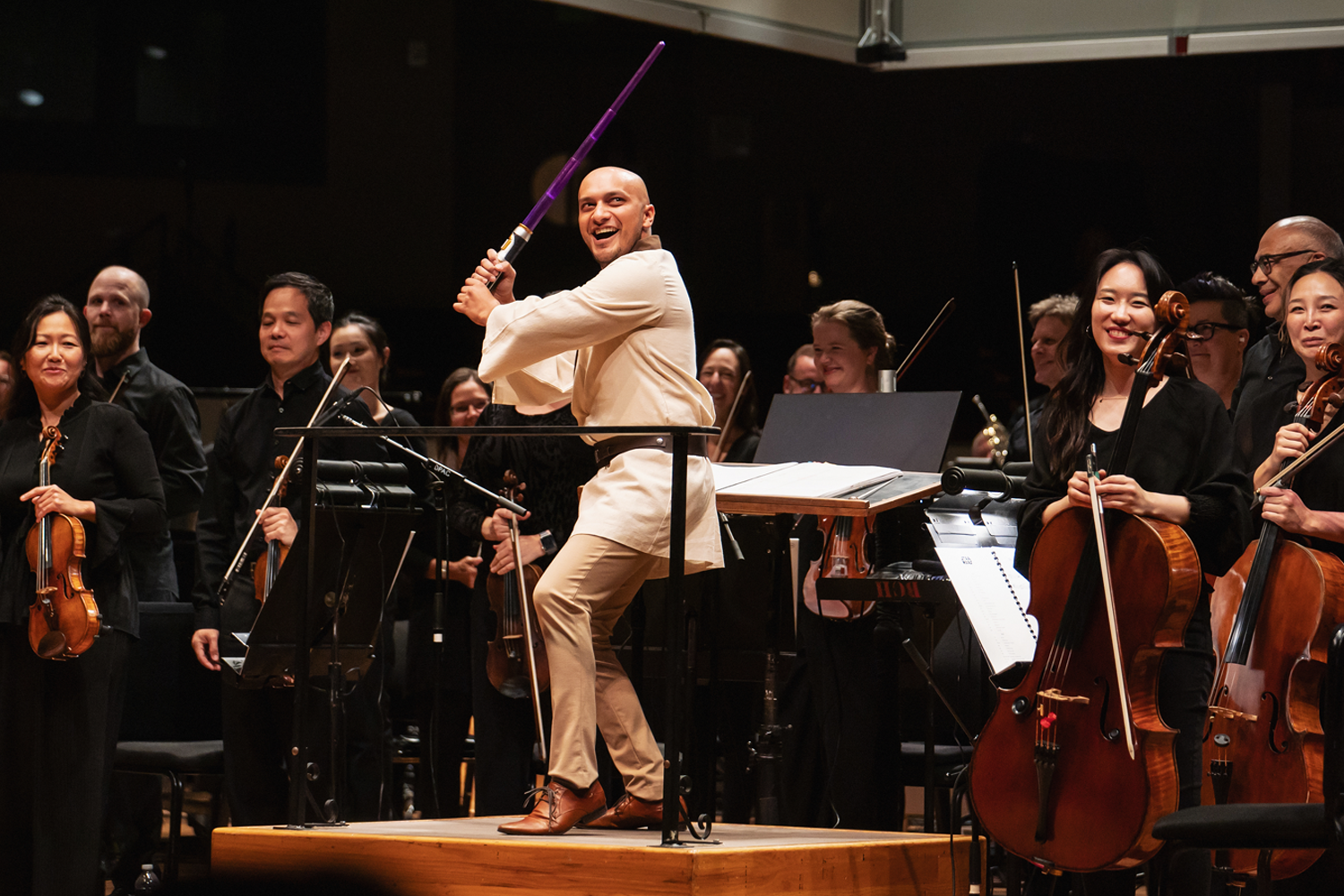
That philosophy extends to the lighter moments, too, whether it’s a costume, a bit of playful stagecraft, or a wink to the audience. “It’s healthy not to take ourselves too seriously,” he says. “Orchestras can be joyful, playful, and human and that matters today more than ever.”
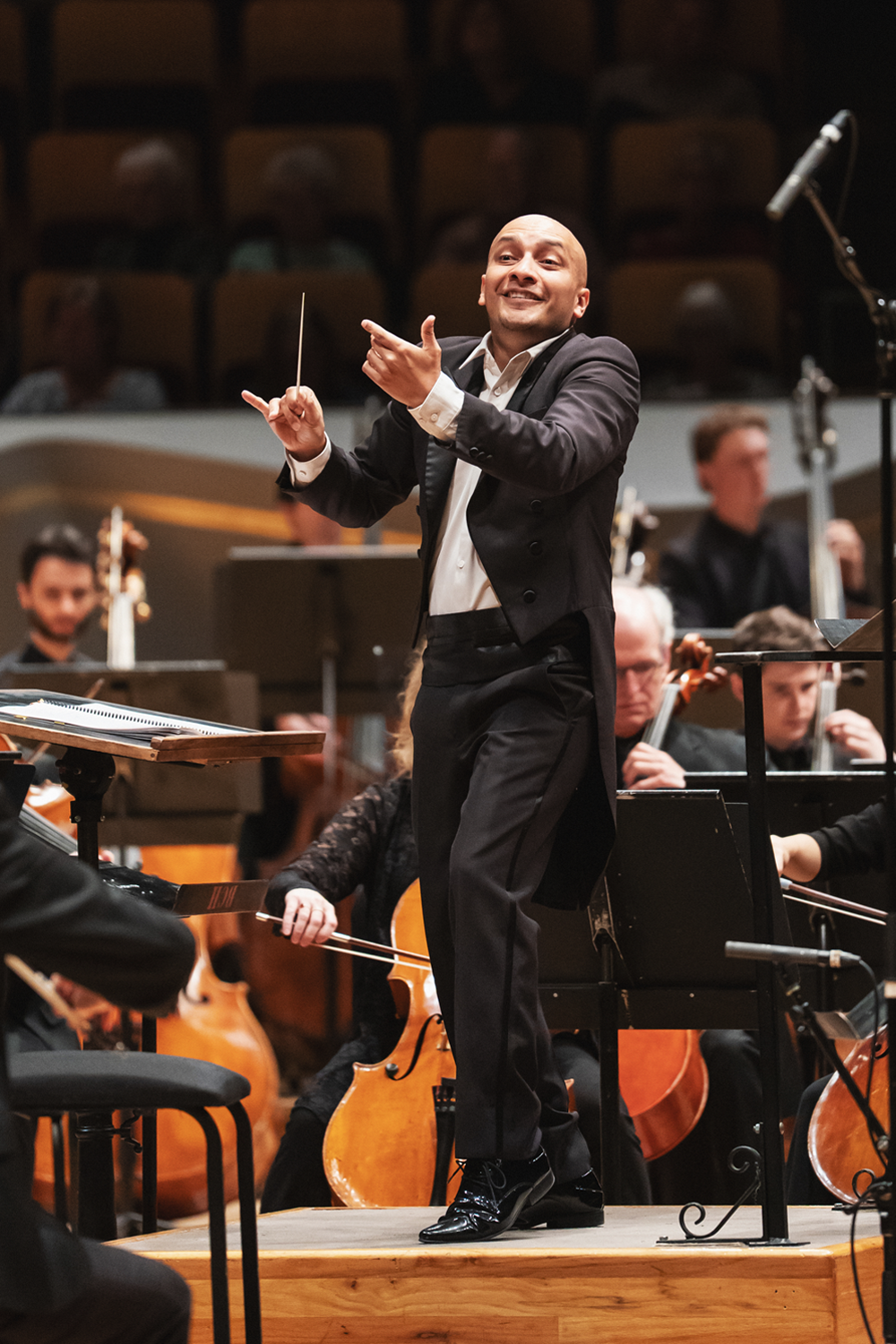
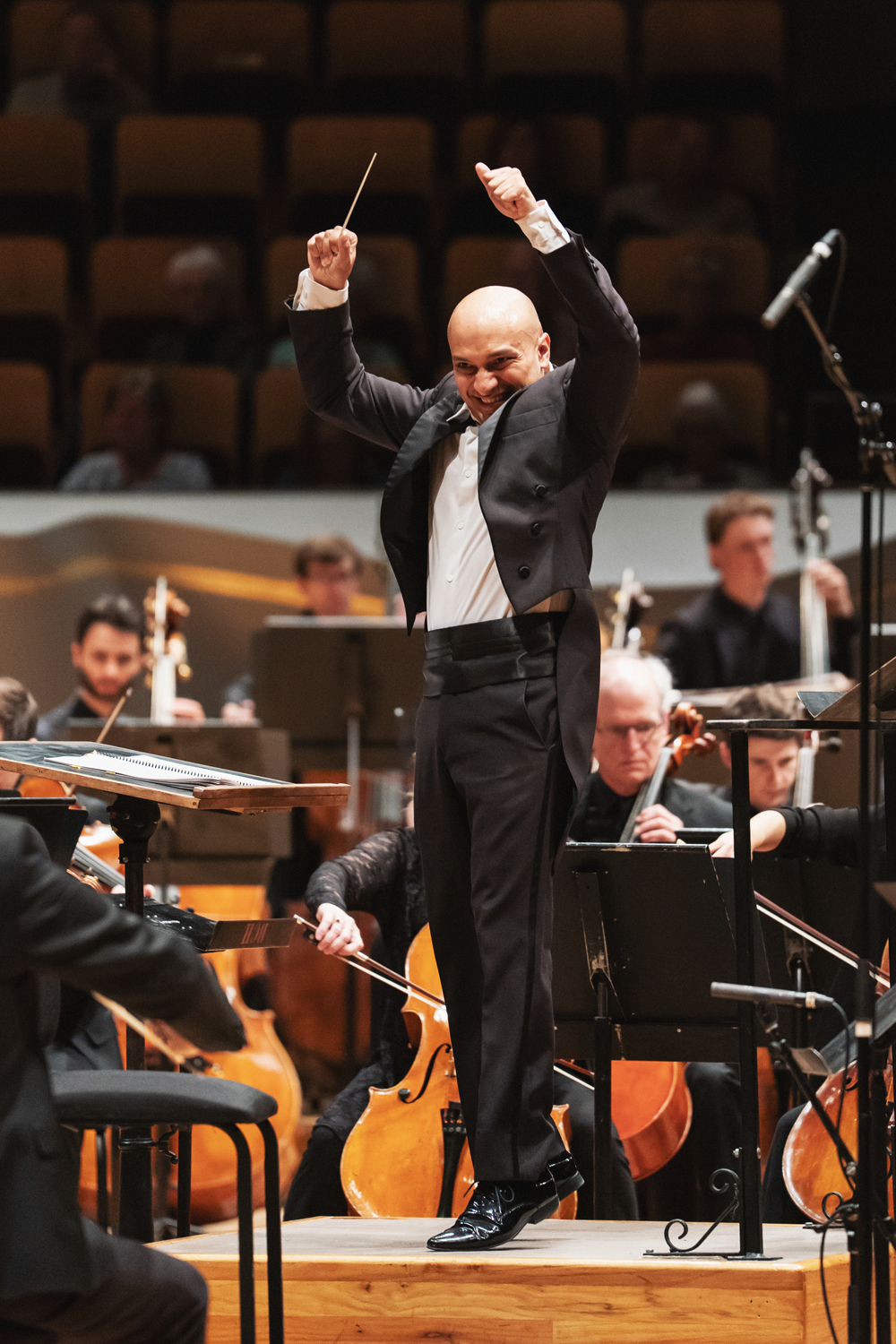
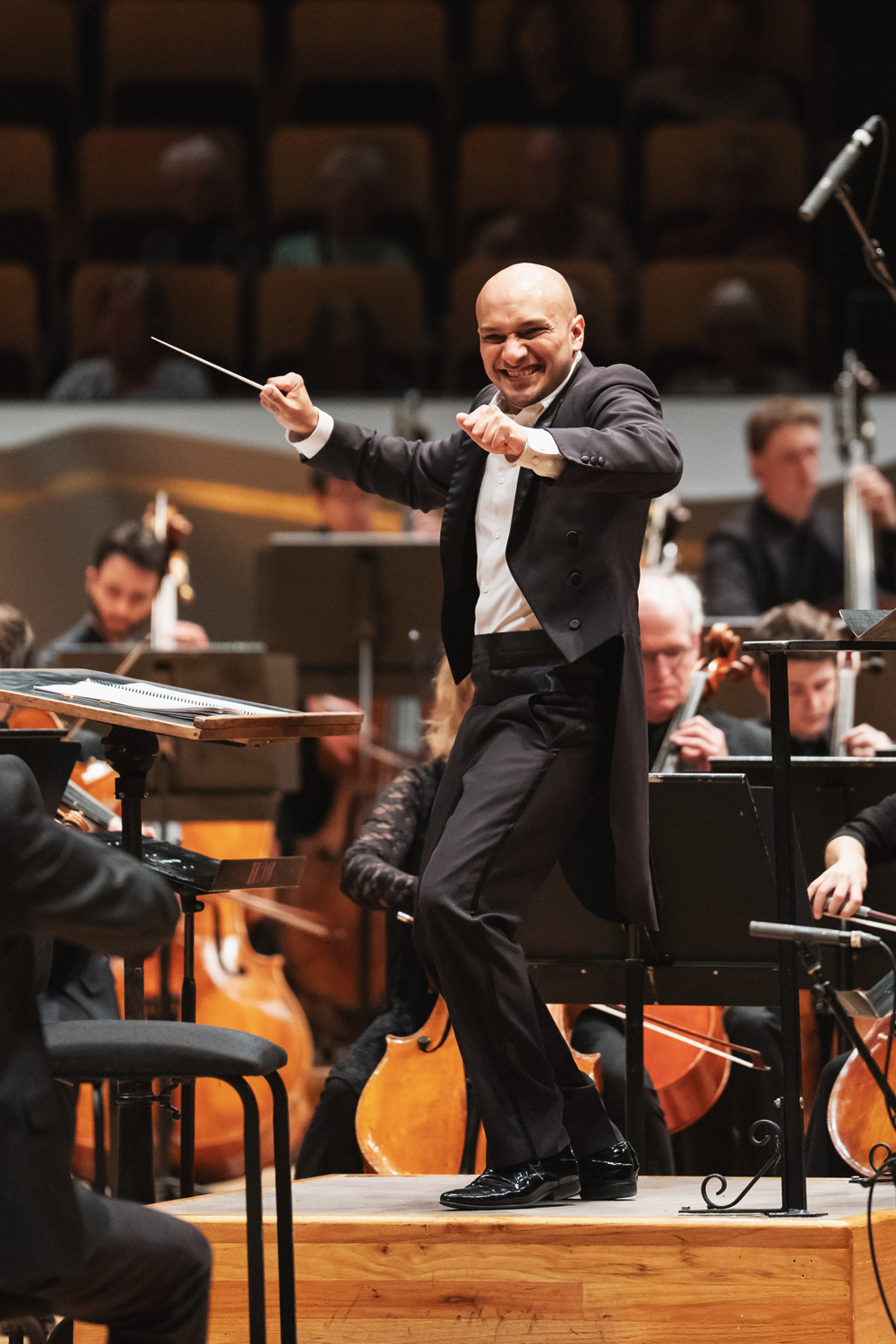
Ask Dragon where he belongs, and the answer comes quickly: Colorado. When he arrived from Perth, Australia years ago, he knew no one. What he found was a community that welcomed him fully — musicians, administrators, and audiences alike. Over time, professional relationships became friendships. He spent holidays with musicians’ families. The line between work and life softened.
“That closeness breaks down traditional barriers,” he says. “We’re all pulling in the same direction.” Trust, for Dragon, has been built through consistency, respect, clarity, and an efficient use of time, along with the understanding that in conducting, you’re often judged by your last concert.
That shared pressure, he believes, ultimately leads to better music.
Next season, Dragon steps into a new five-year contract with the Colorado Symphony — another evolution in a relationship that has defined much of his professional life. By now, his career has expanded significantly: he is currently Music Director of the Greensboro Symphony, newly appointed Music Director of the Philly Pops, and a frequent guest conductor across the U.S. and internationally. Yet Colorado remains protected time.
“This organization shaped my career. I want to continue helping it grow.”
Music Director Peter Oundjian remarked, “Chris has been an indispensable artistic force for our ensemble. This new contract both acknowledges his leadership on stage and provides a foundation for even greater creative collaboration in years to come.”
“This new agreement solidifies my future here,” he says. “It’s rare for a staff conductor to be with one orchestra this long, let alone to grow into a role like this.” Despite the natural pull of new opportunities, Dragon is clear: he has no desire to leave. “This organization shaped my career,” he says. “I want to continue helping it grow.”
Colorado is also where Dragon built a life beyond the podium. Last year marked a major personal milestone with his marriage to his wife, Ariadna, someone who understands both the intensity and the sacrifices of a conducting career. “She’s helped me find better balance,” he says, laughing. For their wedding celebration, she insisted he take an entire month off from conducting. It turned out to be transformative.
“It reminded me why balance matters,” Dragon reflects. “Success isn’t just about career milestones — it’s about building a happy life while pursuing your dreams.”
As his platform grows, Dragon feels a deep responsibility, to the Colorado Symphony, to Denver audiences, and to the future of the art form. “The Colorado Symphony is an artistic gem,” he says. “I’m proud to be one of its biggest ambassadors.”
That pride is mutual. In Christopher Dragon, the Colorado Symphony has found a rising star on the podium, and a partner who grew alongside the orchestra, who believes in its mission, and who calls it home. And when he raises his arms on the podium, you can hear exactly what that commitment sounds like.
∎