

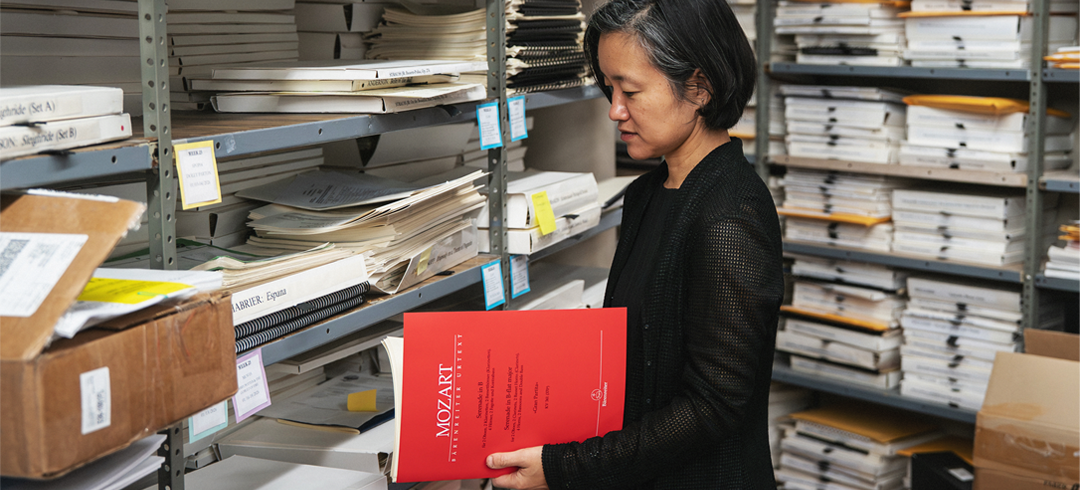
On any given day at Boettcher Concert Hall, more than 80 musicians take the stage with confidence, knowing that every page they turn will be correct, every marking crisp, every bowing unified, every cut precise. That quiet certainty, so easy for audiences to take for granted, is the result of a hidden world just steps away from the lights and applause. It is the domain of the Colorado Symphony’s Library team: a trio of musicians-turned-magicians whose craft shapes every measure of music before a single note ever rings through the hall.
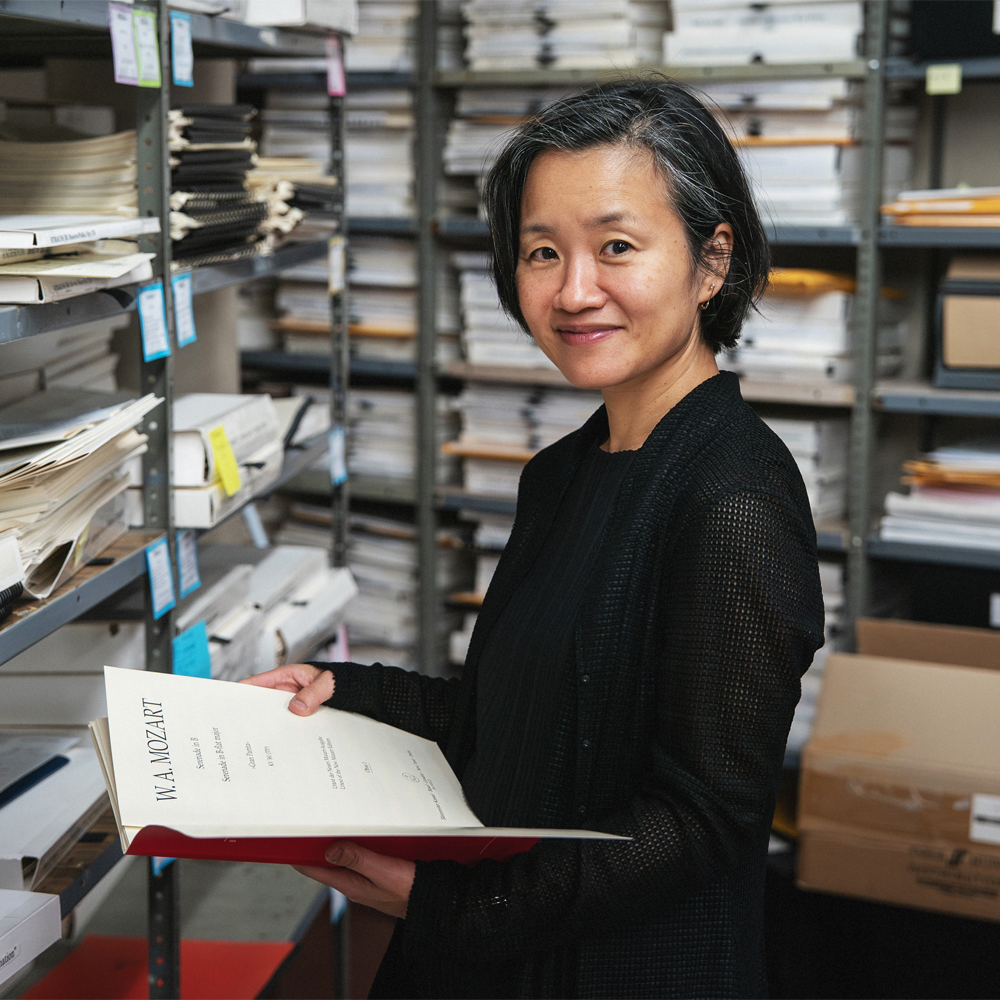
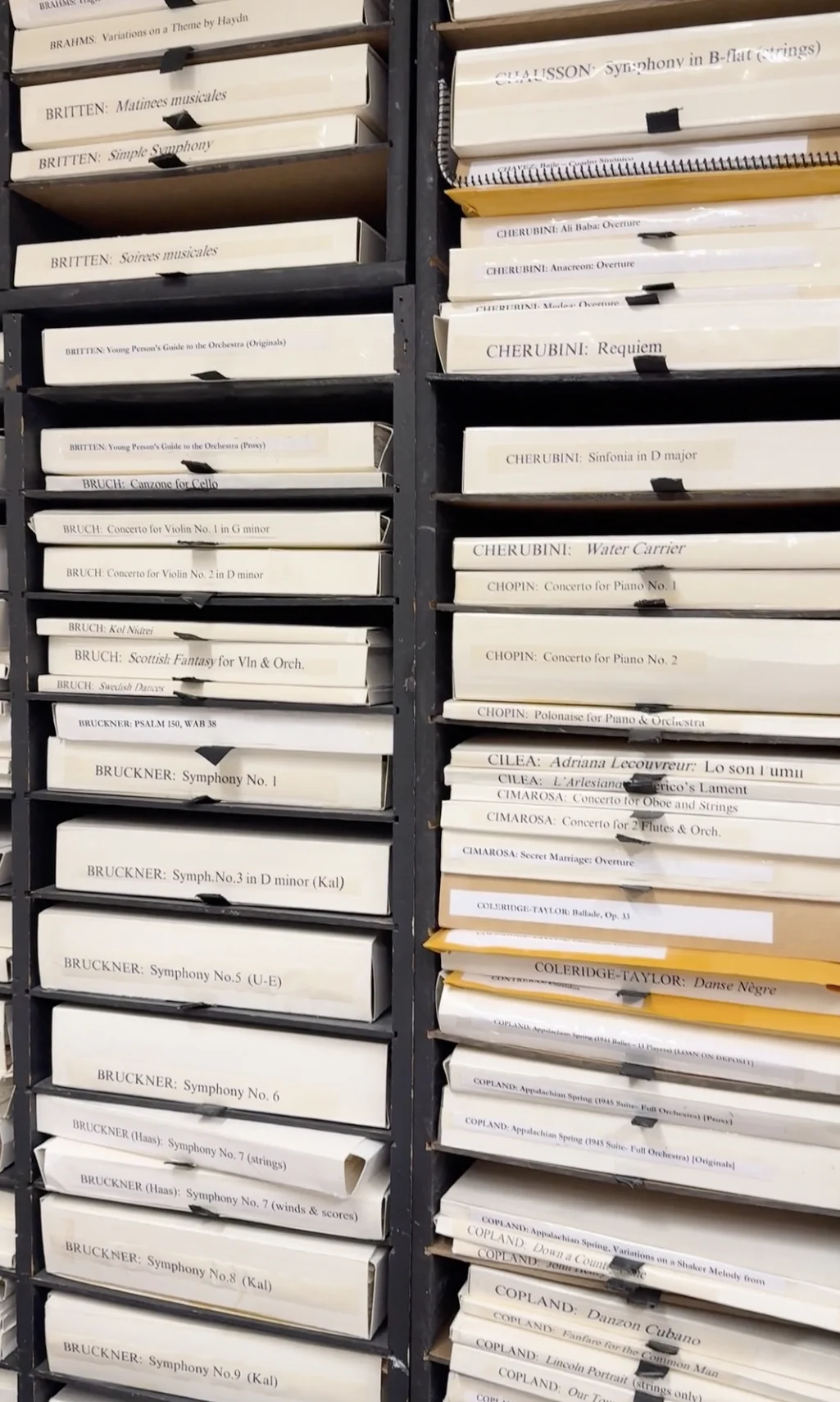
In the public imagination, libraries conjure rows of books and a hush of study. But the Symphony’s library is a different kind of cathedral. Here, scores arrive from around the world — fresh, worn, tattered, or pristine — and are transformed, edited, repaired, notated, clarified, and ultimately prepared for performance with painstaking care. Every program, every week, begins and ends with this team.
“The right music, at the right place, at the right time.”
For Orchestra Librarian Lyle Wong and Assistant Librarians Hitomi Sipher and Aspen McArthur, the job begins long before the audience finds its seats.
“A phrase commonly used by orchestral librarians is that it’s our job to have ‘the right music, at the right place, at the right time,’” the team explains. “We ensure the musicians not only have the correct music at each service but as much information as possible in advance, so rehearsal time isn’t spent coordinating bowings, correcting erroneous notes, or communicating cuts.”
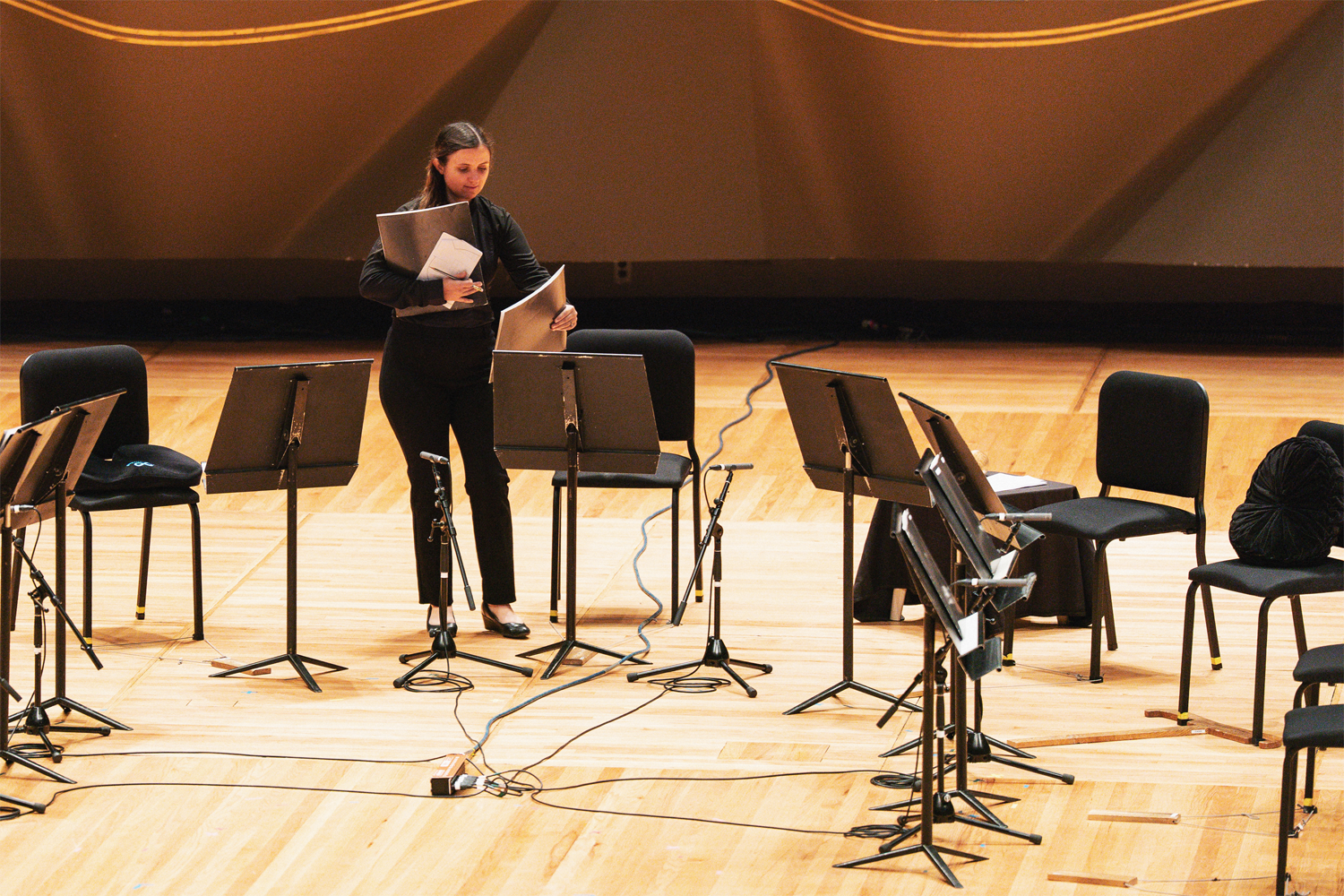
In other words: an orchestra librarian is part musicologist, part archivist, part copyist, part production coordinator, part detective, and part crisis-manager.
The work begins as soon as a concert is programmed, sometimes months, sometimes years before an audience hears it. “As soon as possible,” the librarians say. Once they receive a confirmed program, they spring into action: sourcing scores from publishers large and small, tracking down rare parts, receiving materials from arrangers, or purchasing public-domain editions. Rental materials often arrive just 6–8 weeks before rehearsal, triggering an accelerated race against the clock.
And then the real work begins.
Preparing the Ink Before the Music
Even when a piece already lives in the Symphony’s library, it must be fully evaluated for the program ahead: bowings, articulations, divisi, rehearsal markings, cuts, errata, page-turn problems — the subtle but essential details that, if overlooked, can turn rehearsal time into chaos.
“We examine each part as if we were the performing musician and ensure that it is as close to perfect as we can make it.”
This means flipping through hundreds of pages with a meticulous eye, sometimes laying them out across the entire workroom. It means coordinating with the Symphony’s Artistic and Production teams about instrumentation and layout. It means receiving instructions from the conductor and distributing information to musicians quickly and clearly.
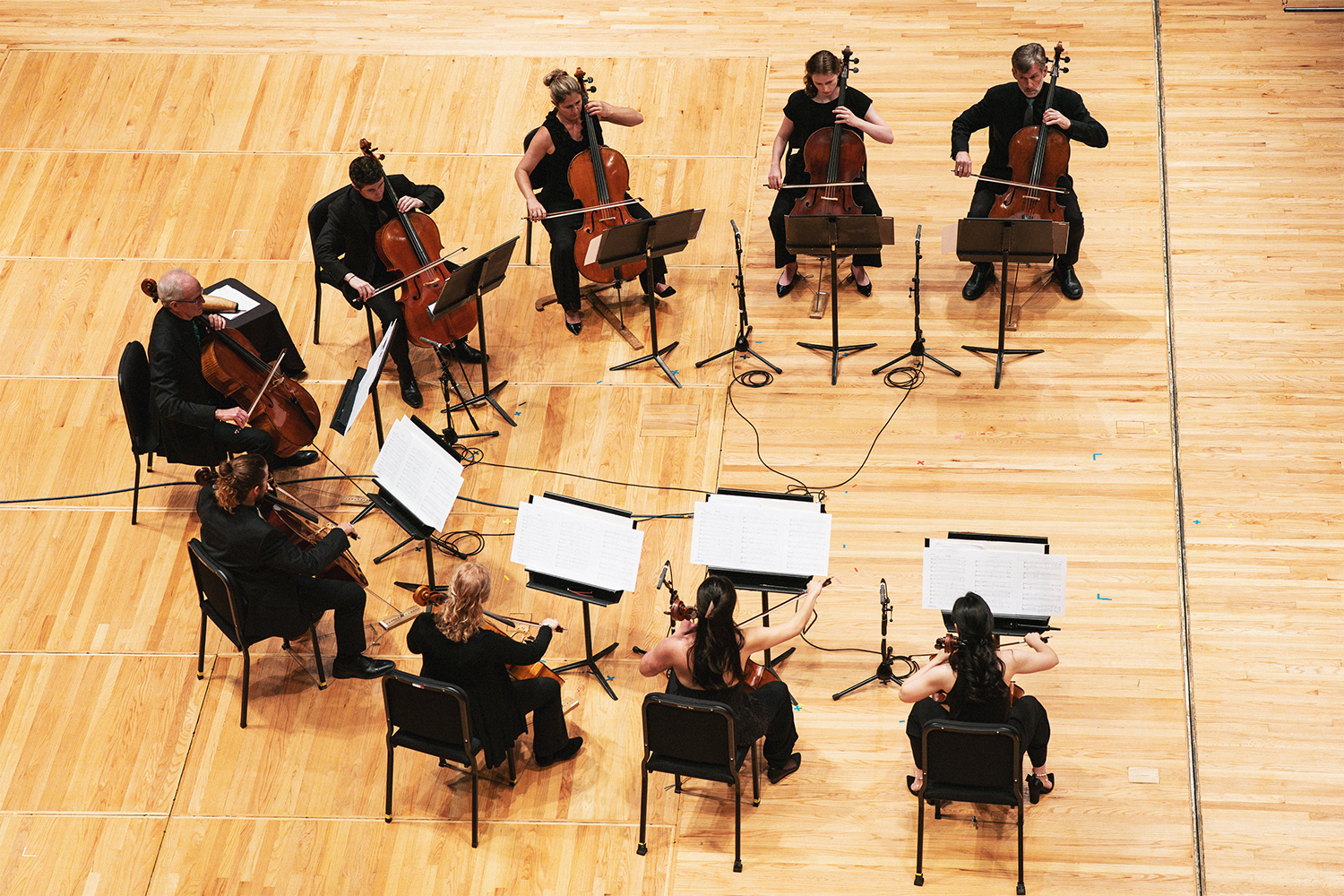
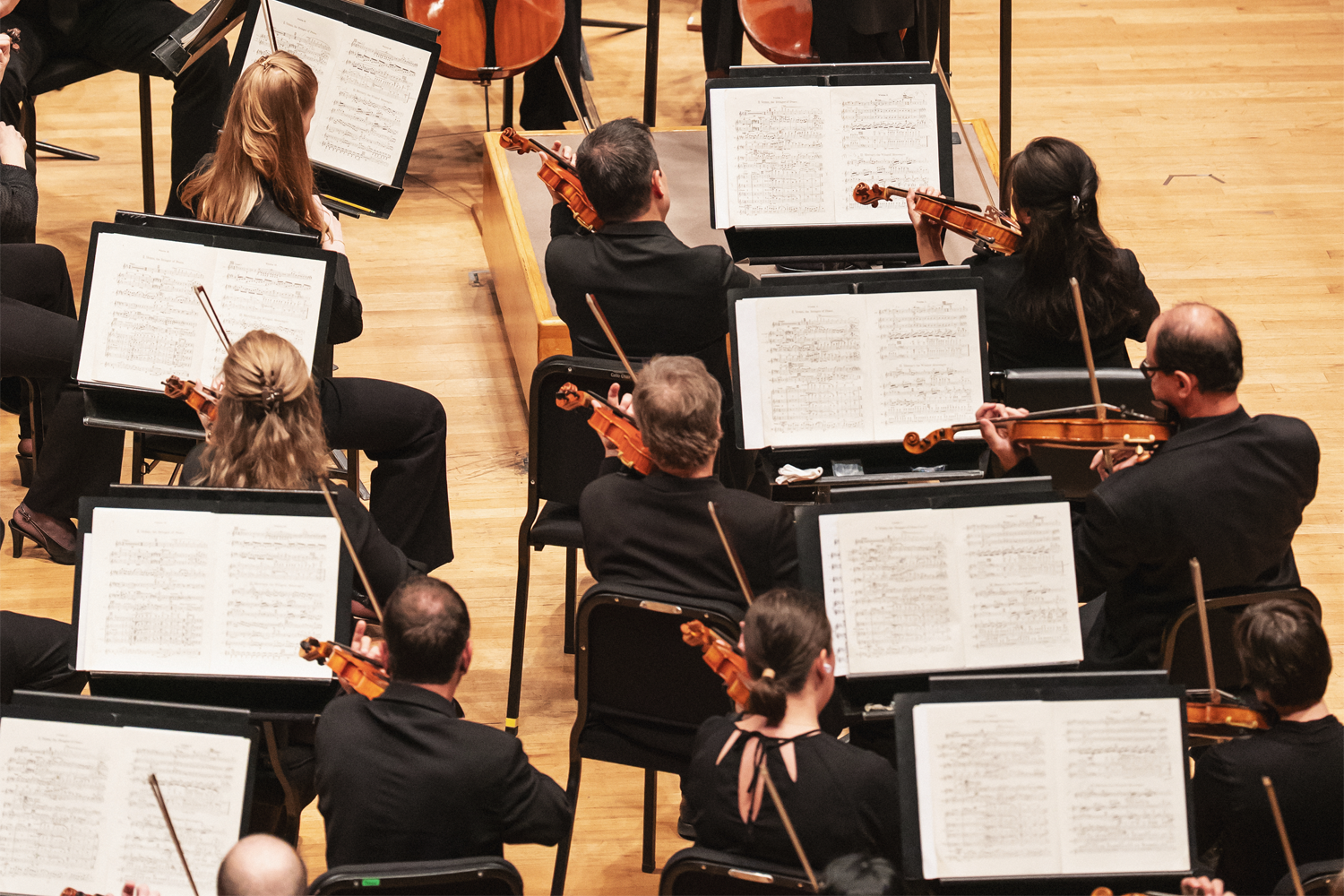
And for the strings, one of the most collaborative and tradition-rooted processes in the orchestral world: bowings.
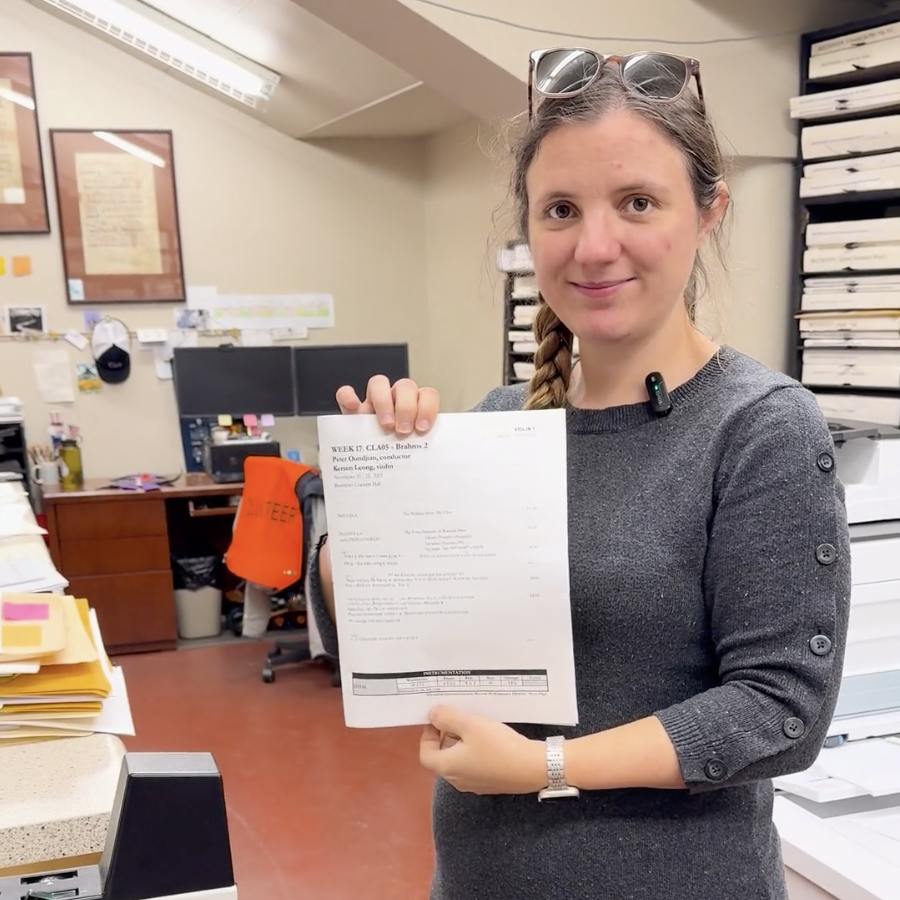
Bowings begin with Concertmaster Yumi Hwang-Williams, who marks the first violin part. “Once they are returned,” the team says, “copies are provided to Kate Arndt, Principal Second Violin, then to Basil Vendryes, Principal Viola, Seoyoen Min, Principal Cello, and Steve Metcalf, Principal Bass. As soon as we receive each of the principals’ parts back, the librarians copy any bowings or changes to the sections’ parts.”
It is a chain of precision, communication, and trust — one that ensures the entire string section moves as a single organism on stage.
The Invisible Craft
Lyle, Hitomi, and Aspen arrived at librarianship from different musical beginnings — clarinet, piano, and viola respectively — but all share a similar moment of discovery: the realization that the work behind the scenes was its own form of artistry.

Concert Night: The Calm After the Storm
By the time an audience arrives, the librarians have already lived through weeks of preparation, dozens of edits, and an untold number of decisions that shape what the musicians see on their stands.
And then, finally, concert night arrives.
“If everything is going well, concert nights are surprisingly the most chill time for a librarian,” they say with a smile. But they stay vigilant.
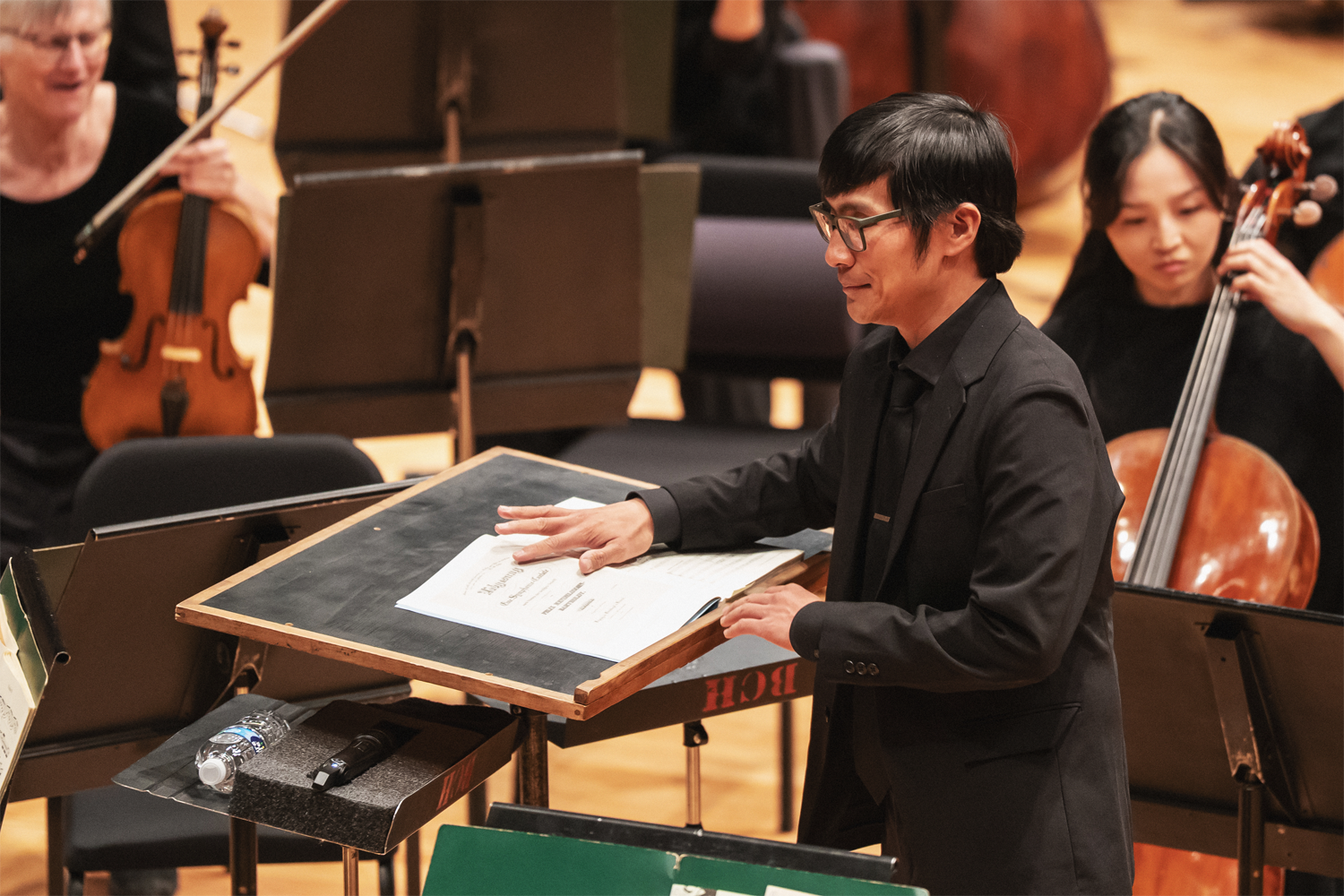
Five minutes before showtime, the librarian knocks on the conductor’s dressing room door and collects the conductor scores, the full-size scores that include music for the entire ensemble. While the musicians warm up, the librarian places the scores on the podium and disappears backstage.
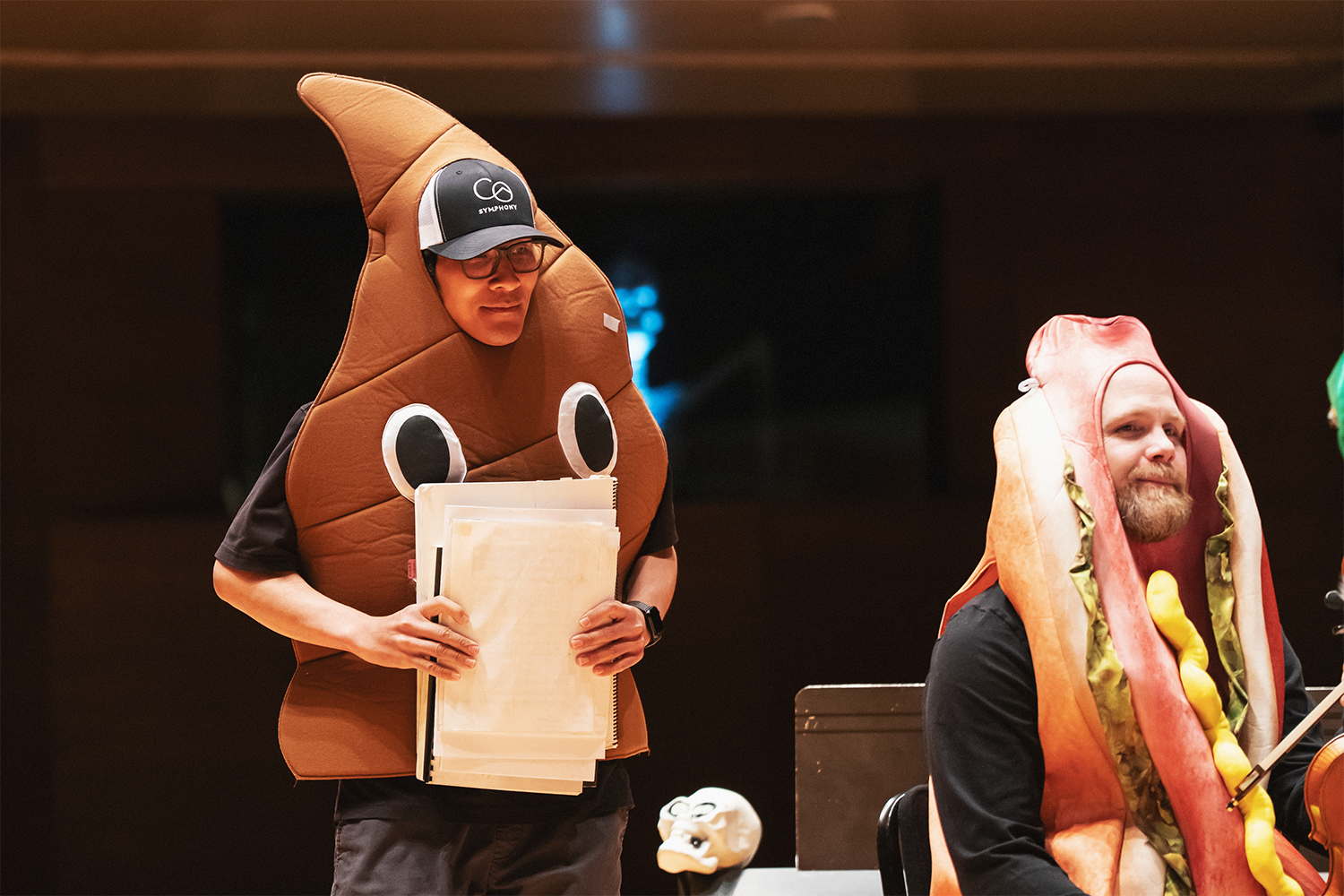
In the wings or backstage, they scan the orchestra for signs of trouble: “We’re often on the lookout for panic in musicians’ eyes — it can be an early indicator that they may have forgotten their music or are missing something.” They listen to rehearsals through monitors while continuing other work, ears tuned not just to the beauty of the music, but to the cues of potential problems: extended pauses, repeated passages, conversations that might signal confusion.
Once the performance begins, the team may slip in to hear a passage or two — one of the quiet rewards of their work — before preparing to collect the music after the final bow.
A Profession Few Understand, But Every Orchestra Depends On
The role of an orchestral librarian remains widely misunderstood, even within the music world. “It may surprise some,” the team notes, “that librarians are required to have performance or music education degrees, to complete extensive training programs, and often even audition to win positions with orchestras.”
Their work touches every part of the organization — from musicians to conductors, guest artists, artistic staff, production crew — and impacts every performance an audience hears.
“At the core of what we do, we ensure that the performing musicians have the tools they need to provide Colorado with the very best live, symphonic music. Our work allows our artistic teams to bring new and diverse programming to the community.”
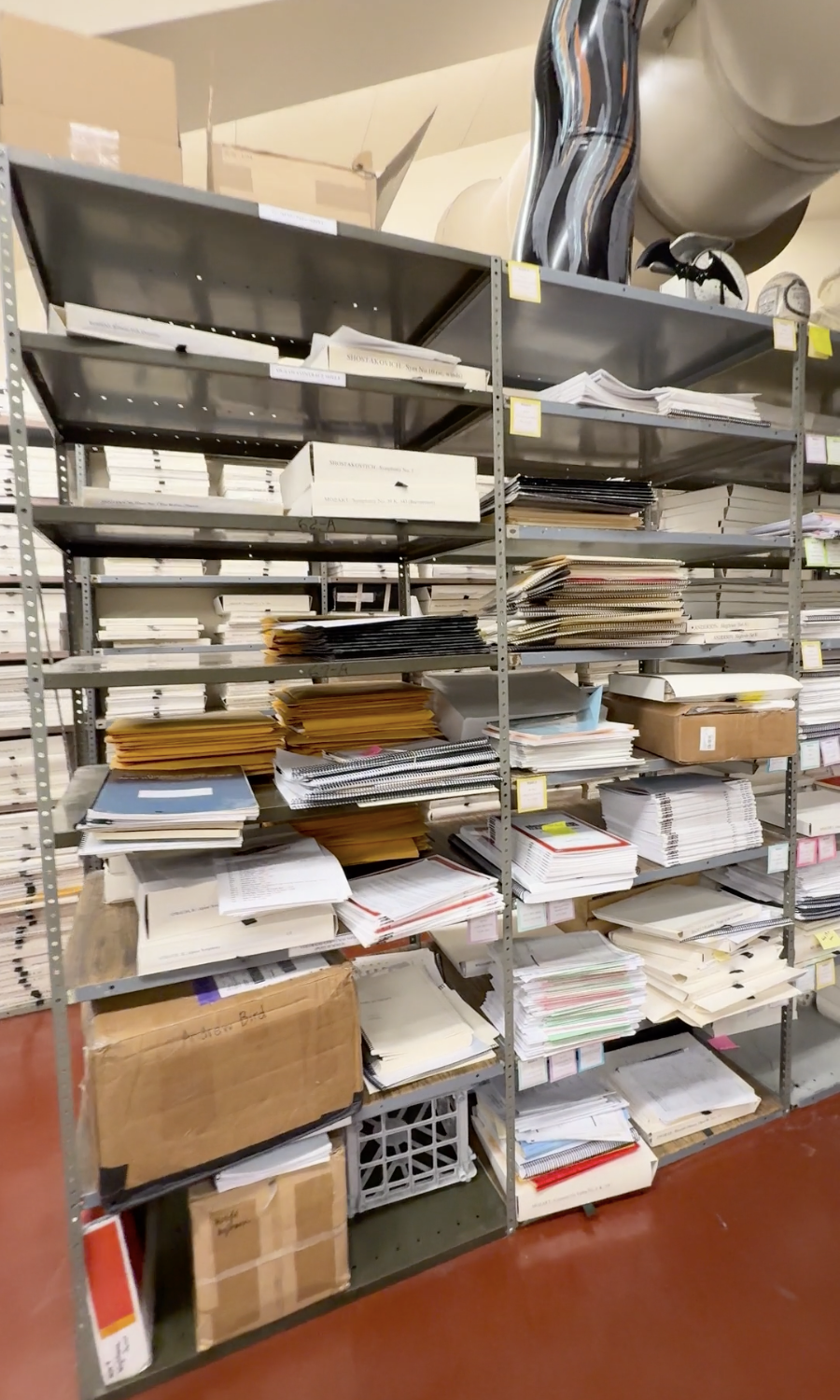
Audiences may never glimpse the chaotic beauty of the library workroom — the stacks of scores, the marked bowings drying on a desk, the razor-sharp pencils, the shared jokes about misprinted parts or impossible page turns. They may never witness the librarians’ calm response to a last-minute change or a missing part minutes before downbeat.
But they will hear the results.
Every unified phrase. Every seamless transition. Every articulation that sounded effortless because someone made sure it was clear before the musicians ever rehearsed it.
The Colorado Symphony Library may stay in the shadows, but its work beats steadily beneath every performance.
And though audiences may never see them center-stage, their imprint is in every note.
∎